Why Is Simi Valley Taking All This Fire Debris? City Council Confronts Truckloads, Trust and Toxic Concerns
 Sylvie Belmond
(CLAIR | Simi Valley, CA) — From morning through evening, a steady stream of trucks climbs the hillside at the Simi Valley Landfill, each carrying debris from homes destroyed in the Eaton and Palisades fires. The operation has raised eyebrows, prompted questions and, on Monday night, became the focus of a detailed presentation to the Simi Valley City Council.
Federal and private sector officials described how the city’s landfill—though located in Ventura County—is one of three landfills designated to receive fire debris from Los Angeles County properties, playing a key role in the broader recovery effort.
Representatives from the U.S. Army Corps of Engineers and Waste Management explained how the process begins with the Environmental Protection Agency, which removes hazardous materials from each property. These include propane tanks, batteries, solvents, asbestos and other contaminants. Once a site is cleared and tested, the Army Corps steps in to remove the remaining structural debris—wood, ash, soil and other non-hazardous material.
“We do not bring any hazardous waste to this landfill,” said Eric Swenson, commander with the Army Corps. “Every parcel is tested for asbestos. If it’s found, that debris goes elsewhere.” Swenson said testing involves chip sampling foundations and sending them to certified California labs. Only debris that passes this process is hauled to Simi.
Swenson also detailed the safety measures involved in transporting the material. Each load is kept wet to suppress dust, sealed in thick plastic, and covered with two layers of tarps—including an automated top tarp that can flap during transit. Trucks are weighed and inspected both when departing cleanup sites and upon entering the landfill.
After the presentation, Councilmember Mike Judge raised concerns about the long-term impact on city infrastructure. “Our residents see a lot of negative externalities—a lot of truck traffic, potential damage to streets,” said Judge. “Who bears the responsibility for mitigating that or for repaving when this is all over?”
Swenson said road repairs fall outside the Army Corps’ jurisdiction but acknowledged the concern. He said about 77 percent of damaged parcels have been cleared, and that truck traffic will drop off significantly by midsummer as the project winds down.
Councilmember Rocky Rhodes, referencing local history, asked about long-term contamination risks and how they would be detected. Waste Management’s Nicole Stetson said the landfill is equipped with a monitoring network of groundwater wells, which are tested quarterly and semi-annually. Results are submitted to the Regional Water Quality Control Board, and any anomalies would trigger investigation and response. “My anxiety about what’s going into our landfill has been greatly reduced,” said Rhodes. “Hearing it directly from you all really helps.”
Councilmember Elaine Litster shared that she had recently toured the landfill and was struck by the scale of operations and visible safety protocols. She said it’s important the city continue to ask questions and ensure community health is prioritized.
Another concern raised during the discussion involved the appearance of loose tarp flaps on trucks. Rhodes said several residents had contacted him about what looked like exposed debris. Stetson clarified that what people are seeing is often the auto tarp, which can flap slightly at the rear but is layered over two secure coverings, including the sealed plastic wrap around the debris itself.
Swenson emphasized that the landfill only accepts material that has passed through EPA clearance and that the Army Corps conducts on-site inspections during loading and unloading. Sensitive locations like schools and senior housing near cleanup zones are also monitored for air quality.
Simi Valley is one of three landfills designated to receive debris from this disaster, along with the Calabasas Landfill and Sunshine Canyon Landfill in Granada Hills. According to the Los Angeles County Department of Public Works, Simi Valley is the largest of the three and has the highest permitted daily tonnage. Swenson said the site has supported similar efforts during five previous disasters, including the Woolsey and Thomas fires.
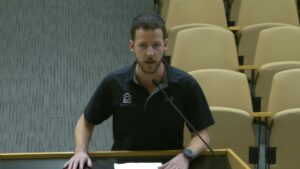
While most of the evening’s presentation focused on procedure, testing and safety, one resident called for additional oversight. John Lapper spoke during public comment to urge the city to go further.
“I still have serious concerns about the monitoring of the disposal material,” Lapper said. He called for independent, ongoing air quality testing in neighborhoods near the landfill and referenced past environmental failures, such as the decades-long contamination associated with the Santa Susana Field Lab.
Swenson said shipping the debris out of state wasn’t a viable option. “This disaster happened here,” he said. “The debris needs to be removed quickly, and we’re working with the landfills that are permitted and experienced.”
The landfill presentation was just one item on Monday’s agenda. It was an effort to address community-wide concerns about safety, environmental oversight and the city’s role in a regional disaster response.
Simi Valley continues to receive debris from thousands of burned parcels across Los Angeles County. The effort is part of a broader recovery strategy—one that depends on timely cleanup so people affected by the devastating fires can begin the long process of rebuilding their lives.