Secrets in the Soil? Boeing Faces Scrutiny Over Santa Susana Cleanup Claims
 Sylvie Belmond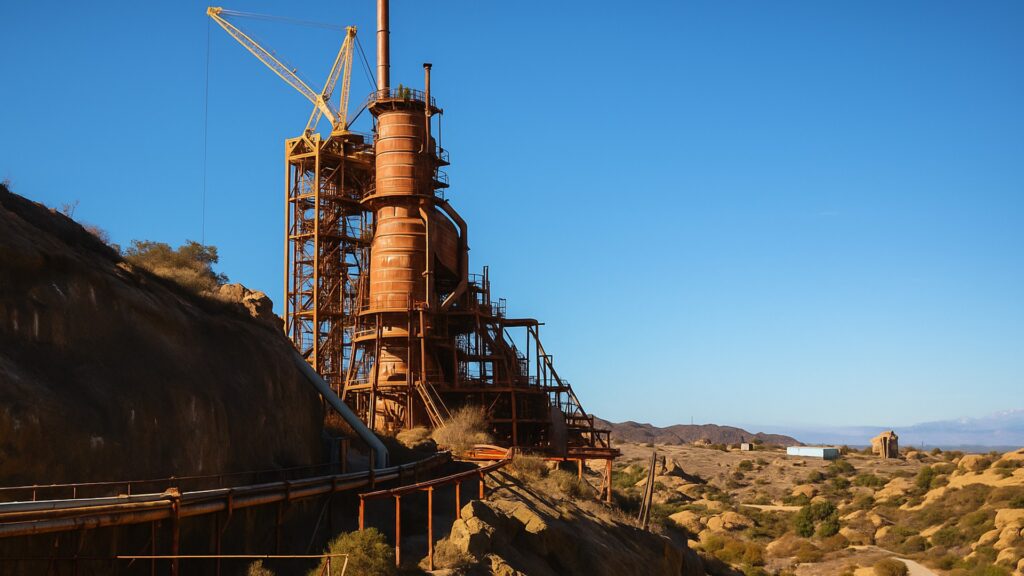
Community Advocates Push Back on Cleanup Plan, Cite Health Concerns and Accountability Gaps
(CLAIR | Simi Valley, CA) — Boeing says it’s making progress at the long-contested Santa Susana Field Lab—but not everyone is convinced.
At the May 28 Legislative Advocacy Forum hosted by the Simi Valley Chamber of Commerce, community members gathered on Zoom to hear updates on government affairs, legislation and corporate impact in the region.
This month’s spotlight was on Boeing, whose representatives addressed the company’s environmental responsibilities at the Santa Susana Field Laboratory (SSFL)—a site long at the center of controversy over contamination, cleanup delays and public health concerns.
Representing Boeing were Mark Taylor, director of government operations for California, and Kamara Sams, program director for SSFL. While Taylor recounted the facility’s legacy, Sams detailed Boeing’s ongoing environmental remediation efforts. Some attendees expressed support for the company’s transparency and progress while others pushed back, calling for stronger oversight and deeper accountability.
Boeing’s SSFL Cleanup Plan Faces Mixed Reactions
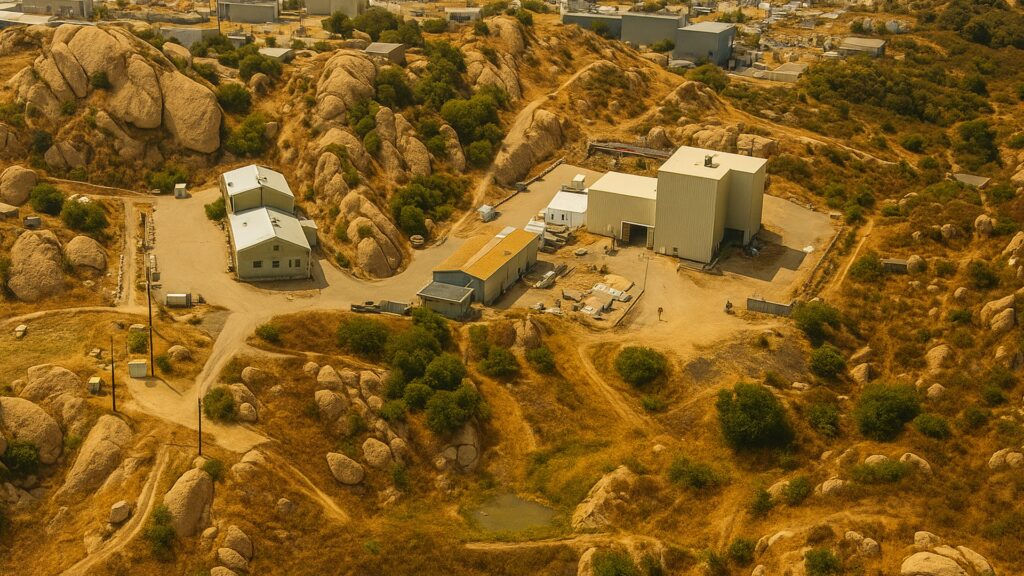
The SSFL site, perched in the Simi Hills, spans 2,850 acres and holds a complicated legacy of innovation and environmental risk. In his presentation, Mark Taylor described the facility’s transformation from cattle grazing land and Hollywood filming location to a hub of rocket engine testing and nuclear research.
The site was acquired in 1947 for testing rocket engines, predating NASA, and was operated by companies such as Rocketdyne and Atomics International. Nuclear activity at the site ended in 1988 and rocket engine testing concluded in 1996. Boeing acquired the property in 1996 and sold its Rocketdyne division in 2005, but still owns approximately 2,450 acres, which it plans to preserve permanently as open space. Taylor emphasized the site’s ecological and cultural significance, noting its wildlife diversity and archeological ties to the Chumash and Tongva peoples.
Kamara Sams explained Boeing’s approach to remediation, stating that the company has completed 16 interim cleanup actions and remediated approximately 75,000 cubic yards of soil. She highlighted their groundwater extraction system and stormwater treatment operations, adding that Boeing has treated the equivalent of 300 swimming pools’ worth of stormwater over the last two years. According to Sams, the site’s aquifer is not connected to Simi Valley’s drinking water supply.
She referenced a 2022 agreement with the California Environmental Protection Agency that commits Boeing to clean up radiological contaminants to background levels, with a final cleanup plan expected from the Department of Toxic Substances Control later this year. She also pointed attendees to publicly available data and fact sheets for more information.

Some participants voiced support. Karen Troop thanked the speakers and said that, on behalf of many community members, she appreciated the progress being made. Forum chair Raul Avila, who also serves as president of the board of directors for Calleguas Municipal Water District, commended the speakers and encouraged continued dialogue.
Still, several people in the audience voiced strong objections. Melissa Bumstead, founder of Parents Against SSFL, questioned Boeing’s transparency and monitoring reliability. She cited a monitoring system that had been offline for two years and asked whether a required study at the Silvernale site—relating to potential groundwater contamination—had been completed. Sams said she would follow up. Bumstead also criticized Boeing’s survey results showing public support for the cleanup, calling them misleading. “People deserve to be protected,” she said. “And Boeing should be held to the highest standards of cleanup.” Bumstead, whose daughter is a cancer survivor, emphasized that families affected by illness face healthcare, financial and emotional burdens—especially those who believe their health problems were caused by SSFL contamination.
Jeni Knack, also of Parents Against SSFL, noted that the EPA flagged two wells used by Golden State Water Company as potentially impacted by SSFL groundwater. She accused Boeing of failing to meet a health-protective standard. Adam Salkin, a longtime area resident, added, “To say that the groundwater is not connected to the aquifers in Simi Valley is just not accurate. I don’t trust Boeing to self-monitor. We need independent oversight and a real cleanup.”
Sams responded with an overview of Boeing’s expert groundwater panels and site-wide well network, which she said supports their understanding of aquifer boundaries and flow.
Broader Legislative Concerns and Regional Issues
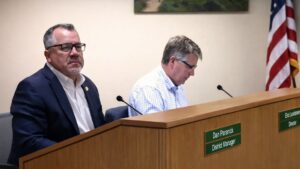
Beyond SSFL, the forum addressed a wide range of state-level legislative concerns and regional infrastructure issues. Nichol Richardson, a senior public affairs representative with Metropolitan Water District, and Charlotte Holifield, external affairs manager at Calleguas, discussed the Delta Conveyance Project, which delivers water from the Northern Sierra to Southern California and plays a crucial role in Ventura County’s water security. Holifield noted that many Ventura County communities rely almost entirely on imported water and that securing the project’s funding in the June state budget is a priority.
California’s projected $12 billion budget deficit loomed large in the discussion. Anthony Angelini of the Simi Valley Chamber reported likely 3% cuts to education and deeper reductions in healthcare. He highlighted the Chamber’s legislative advocacy efforts, including monitoring over 70 bills and taking positions on proposals like SB 310 (limiting abusive PAGA lawsuits) and AB 1331 (restricting surveillance in non-public areas). Angelini also discussed a potential downtown district redevelopment fund and emphasized efforts to support tourism and business revitalization.
Mike Kort, representing Supervisor Janice Parvin, shared that Ventura County Behavioral Health has secured a $93 million state grant to fund new services, including a crisis stabilization unit set to open this fall in Simi Valley. Rocky Rhodes, a Simi Valley councilmember, reported on recent presentations from Waste Management and the new Town Center ownership team. He said the city is closely watching redevelopment proposals and continuing discussions around zoning protections, residential treatment center regulation and fire debris management at the landfill.
Joe Piechowski, who represents Simi Valley and Moorpark on the Ventura County Community College District board, spoke about recent graduation ceremonies and upcoming policy discussions. “That’s why we’re here—to watch the student achievement that takes place during graduation,” he said. He added that the board will soon consider a campus flag policy and expressed concern about AB 90, a bill that would require community colleges to allow overnight parking without providing funds to support it.
Next month’s forum, scheduled for June 25, will feature Dr. Sevet Johnson, CEO of Ventura County, for a focused discussion on healthcare and the impact of state budget revisions.