We Call It ‘Clean Energy’ But The Truth Behind Electric Cars and Solar Power Might Surprise You
 Sylvie Belmond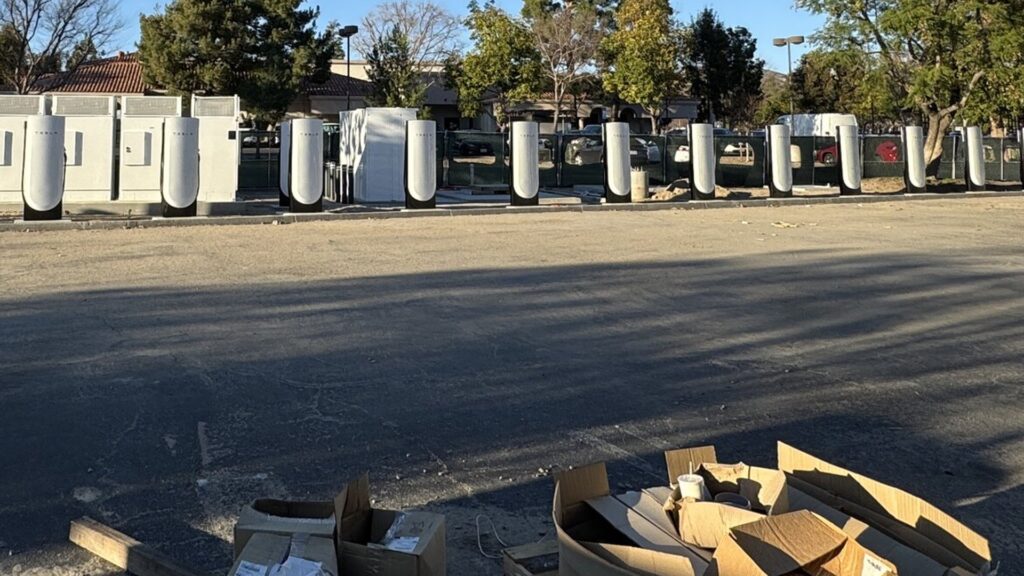
No Free Energy: Join the conversation about how we power the future and tell us what living responsibility looks like for you
(CLAIR | Simi Valley, CA) — Electric cars, solar panels, wind farms and lab-grown meat are all being promoted as ways to reduce our environmental impact. But are these solutions as clean and simple as they seem?
Every source of energy — whether pulled from deep in the ground or captured from the sun — comes with a cost. It takes something from somewhere. Even technologies that look green on the surface depend on materials, machines and systems that leave a mark.
Electric cars don’t release exhaust, which helps keep local air cleaner. But building and charging them isn’t impact-free. According to researchers at the Massachusetts Institute of Technology, making an EV battery can create between 2.5 and 16 metric tons of carbon dioxide. And unless your electricity comes from solar or wind, plugging in still taps into a grid powered largely by coal, gas or oil. So even without a tailpipe, the car’s footprint continues.
What powers the car isn’t the only concern. The materials inside the battery — lithium, nickel and cobalt — come from large-scale mining operations that require heavy machinery, water and fuel. In some regions, extracting a single ton of rare earth elements produces thousands of tons of waste. These metals are also used in laptops, wind turbines and phones — essential tools in everyday life, but not without consequence.
Gas-powered vehicles, of course, have their own environmental costs. They burn fuel, release carbon dioxide and contribute to air pollution. But in recent years, fuel efficiency and engine design have improved. Today’s gas cars use less fuel and produce fewer emissions than their predecessors — a step forward, though they still rely on fossil fuels that won’t last forever.
The shift toward renewables offers another path, but even that comes with its own costs. Solar panels and wind turbines produce electricity without burning fuel, which is a big win. But their creation isn’t carbon-free. The factories that build them often rely on fossil energy. According to the International Energy Agency, more than 60% of global solar panel production still uses coal-powered electricity, much of it in China. Wind turbines require steel, concrete and long-haul trucking to move components into place. These systems often “pay back” their manufacturing energy within a year and then run clean for decades, but they still begin with a footprint.
Even some renewable projects lean on fossil fuels more than expected. If you’ve ever driven to Las Vegas, you’ve likely passed the Ivanpah solar facility, rising from the Mojave Desert just across the California–Nevada border. It uses thousands of mirrors to harness sunlight, but also burns natural gas each morning to get its turbines running. It’s an ambitious project, but a reminder that even solar power isn’t always standalone.
As the energy conversation widens, so do the options — and the questions. In some parts of the country, wood, crop waste and even trash are burned as alternatives to fossil fuels. In Vermont and similar regions, forests are harvested for biomass energy. Supporters call it renewable. Critics worry about the long-term impact on forests, wildlife and air quality. Regrowth takes time, and burning any organic material releases carbon. Some waste-to-energy plants also raise concerns about pollution and ash. These are trade-offs, not free passes.
Biofuels made from corn and soy are promoted as substitutes for gasoline. But growing, harvesting and processing those crops takes energy, too. In Iowa, researchers once estimated that ethanol production consumed about 16% of the state’s natural gas supply. Cleaner in the tank, perhaps, but still tied to fossil fuel behind the scenes.
As our technology advances, so do our energy demands. Massive data centers — the kind that keep the digital world online — use enormous amounts of electricity to store, process and deliver the information we rely on every day. While we might not see the power behind our clicks and streams, it’s very real, and constantly running.
Another piece of the puzzle is nuclear energy. Some see it as a powerful option: it produces large amounts of electricity with no carbon emissions and doesn’t depend on the weather. But nuclear plants are expensive and take years to build. The long-term storage of radioactive waste remains unresolved, and public trust is fragile after past accidents. Still, in a world trying to move away from fossil fuels, nuclear remains on the table — complex, but worth watching.
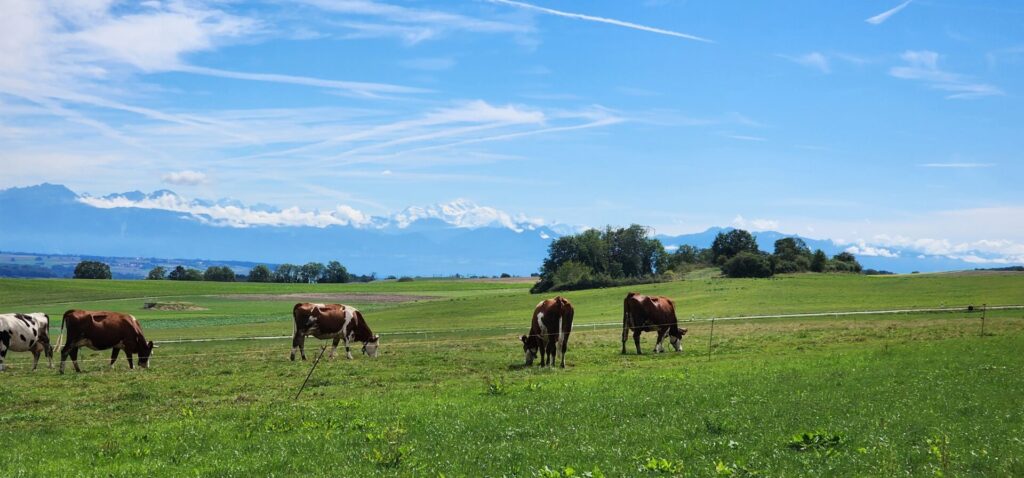
Food systems bring their own challenges. Industrial livestock — cows, pigs and chickens — is a major source of methane, a heat-trapping gas more potent than carbon dioxide in the short term. According to the United Nations, livestock accounts for about 14.5% of global greenhouse emissions. Just one cow can emit more than 200 pounds of methane each year, according to researchers at UC Davis. Raising animals at scale also uses massive amounts of land, water and feed. That raises environmental and ethical questions about how we produce food, not just what we eat.
Fishing isn’t exempt either. About one-third of global fish stocks are overfished, the UN reports. As demand rises, some species are becoming harder to find. Fishermen travel farther and stay out longer to catch less. Smaller fish sizes and disrupted ecosystems hint at a deeper strain. If these patterns continue, wild-caught seafood may no longer be a staple.
So where does that leave us? We all rely on energy — for warmth, for food, for mobility, for connection. And we all leave a mark. There’s no free energy. Whether we plug it in, burn it, grow it or bottle it, every watt has a source and a consequence.
Maybe the better question isn’t which option is perfect, but what trade-offs we’re willing to live with — and how we can reduce the damage wherever we can.
Have you made changes to reduce your impact? Do you buy local? Eat food grown nearby? Use less? Waste less? What’s working — and what still feels hard?
Tell us what living responsibly looks like for you.
This isn’t about blame or guilt. It’s about awareness, conversation and community. The choices we make — and the questions we ask — will shape the world we leave for those who come next.