Turn Off Netflix and Look Up: Ventura County’s Free Stargazing Party Is Pure Cosmic Magic
 Sylvie Belmond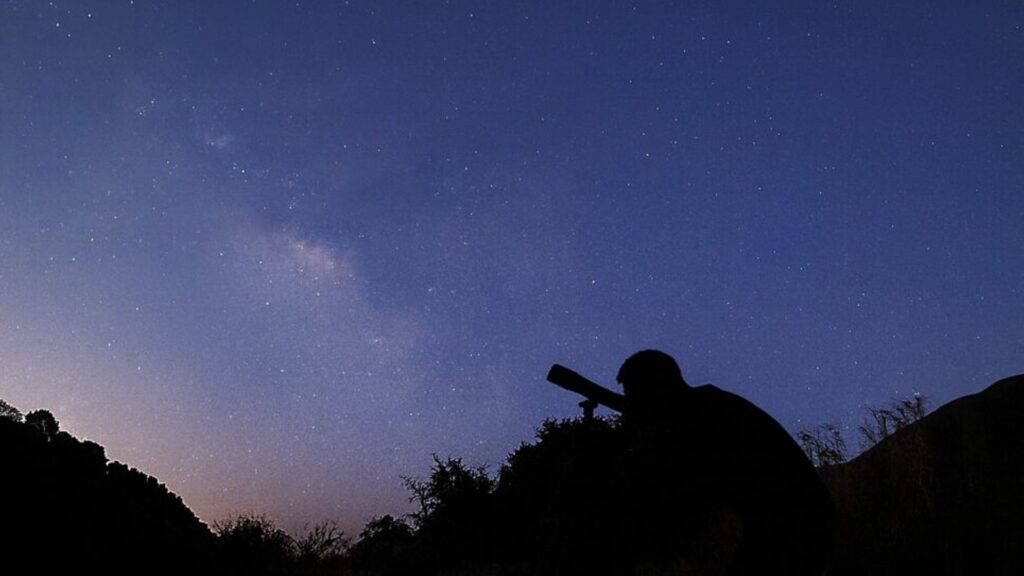
Community invited to observe the night sky at Paramount Ranch
(CLAIR | Simi Valley, CA) — The night sky will be the main attraction on Saturday, Sept. 13, when the Ventura County Astronomical Society (VCAS) hosts a Stargazing Party at Paramount Ranch in Agoura Hills. The free event begins at 7:30 p.m. at 2903 Cornell Road, where visitors can step away from city lights and experience the cosmos up close.
Most evenings are spent indoors under electric light, but nights like this invite people outside to rediscover the sky. Looking up at planets, star clusters, and the sweep of the Milky Way offers more than a dazzling view—it offers perspective. Under a dark sky, Ventura County residents share not just neighborhoods and roadways, but a common universe.
That sense of connection is at the heart of VCAS. The all-volunteer organization is dedicated to informing and inspiring the community, and its members are known for setting up telescopes at public events and inviting anyone to take a look. It is, quite literally, a way of seeing through someone else’s lens, and then sharing the wonder together.
VCAS has been creating these moments for decades. Formed in the 1960s as the Oxnard Model Rocket and Astronomy Club, the group became the Ventura County Astronomical Society in 1971 and marked its 50th anniversary in 2021. In a video on the society’s website, one longtime member describes their gatherings as “stellar views, cosmic adventures—a blast, from star parties at dark sky locations to trips at Mt. Wilson.” Over time, they’ve built a tradition of exploring the universe one star party at a time.
The society also partners with Moorpark College Observatory, where the public can view celestial objects through 12-inch mirror telescopes and even larger clock-driven instruments. Public programs and lab classes there ensure that astronomy is more than theory—it’s hands-on learning, paired with the thrill of discovery.
Stargazing parties often highlight the familiar—the rings of Saturn, the craters of the moon—but they also open conversations about what’s new in our skies. This summer, astronomers confirmed the discovery of 3I/ATLAS, only the third known interstellar object to enter our solar system. Unlike regular comets, which orbit the Sun, interstellar objects travel on hyperbolic paths, passing through once and then continuing back into deep space. Most scientists say ATLAS behaves like a comet, but its unusual qualities have led one Harvard astrophysicist to speculate whether it could be something more, perhaps even artificial. While such ideas remain on the fringe, they highlight how cosmic visitors can spark wonder well beyond astronomy circles.
ʻOumuamua, the first interstellar object detected in 2017, stirred similar speculation when its odd shape and acceleration didn’t fit neatly into known categories. Whether natural or not, these mysterious travelers remind us that our solar system is not isolated—objects from distant star systems pass through, and for a brief moment, we have the chance to look their way.
Even without a telescope, today’s cell phones and cameras make it surprisingly easy to capture the night sky. Set the device on a steady surface or tripod, point it toward the stars, and switch to a long-exposure mode so the lens can gather more light. The results can be striking—streaks of starlight, a glimpse of the Milky Way, or even a passing satellite. It’s a simple activity to try with kids in the backyard or from a local park with darker skies, and it turns stargazing into something you can take home and share.
Guests at Paramount Ranch will have the opportunity to look through telescopes set up by VCAS members. To help keep the skies dark, attendees are asked to bring flashlights with red filters rather than white beams. Red light preserves night vision, making it easier for everyone to adjust to the dark and enjoy the stars. Whether it’s your first time looking through a telescope or your hundredth, the Stargazing Party is a chance to slow down, connect with others, and remember that even in a busy world, the sky still belongs to everyone.