Publishers Clearing House Owes Millions to Past Winners It Will Never Pay
 Daniel Jordan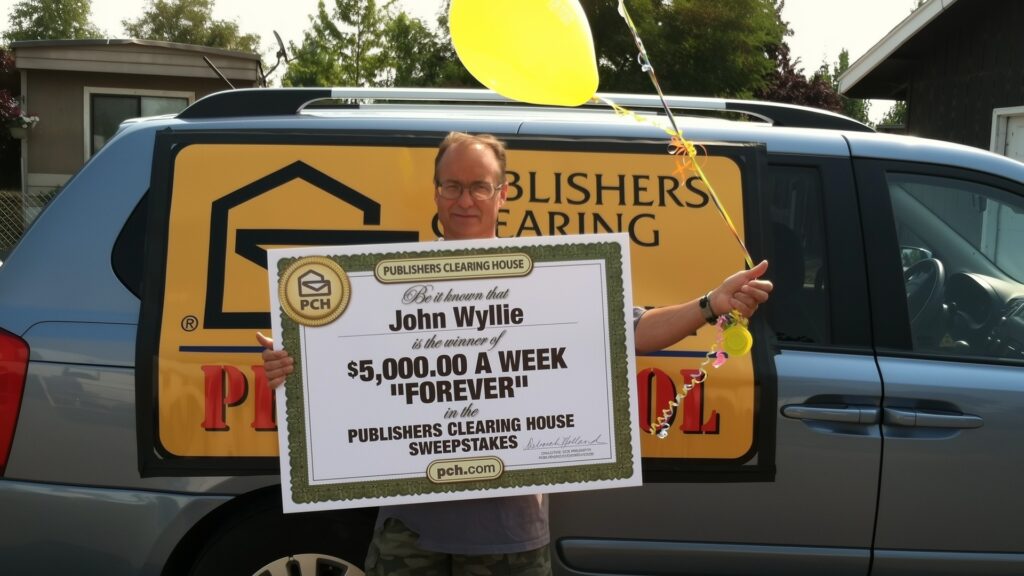
PCH Bankruptcy Means Lifetime Prizes Are Over — Even for Past Winners
(CLAIR | Simi Valley, CA) — If you grew up watching TV in the ’80s and ’90s, you remember the Publishers Clearing House dream. The commercials were everywhere: a van pulling up, balloons bouncing, and a stunned winner holding a giant check worth millions. For many, the sweepstakes envelope was the one piece of junk mail people actually looked forward to — a thin promise that maybe, just maybe, the Prize Patrol might show up at their door with a fat ten million dollar check to be paid in weekly installments — and be set for life.
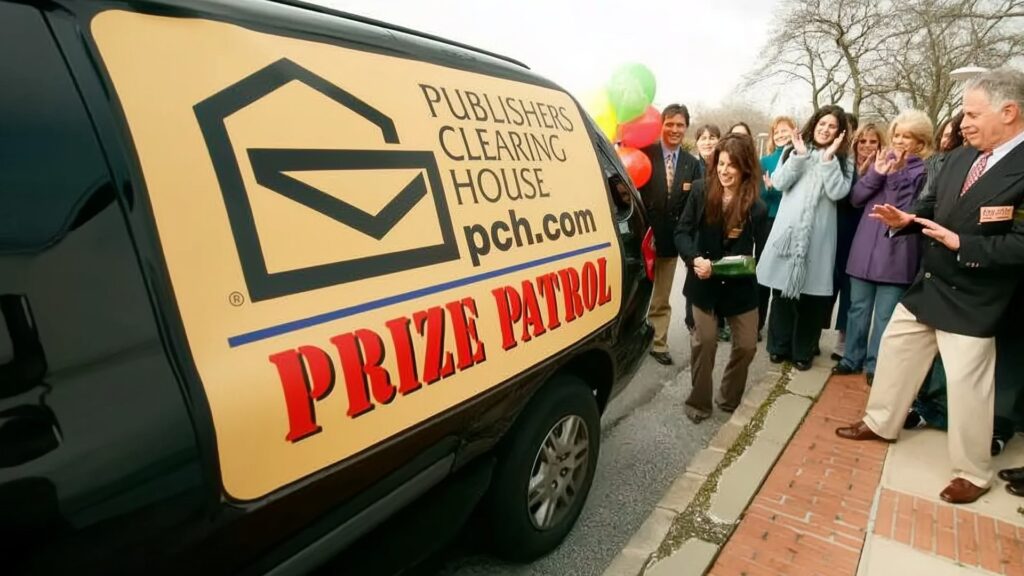
Now that dream has ended. Publishers Clearing House, once a fixture in American homes and a pop culture staple, is bankrupt. The “forever” checks it promised — $5,000 a week for life, a safety net generations of viewers believed in — have stopped. And for the winners who built their lives around those payments, the collapse is devastating.
A Knock That Never Came
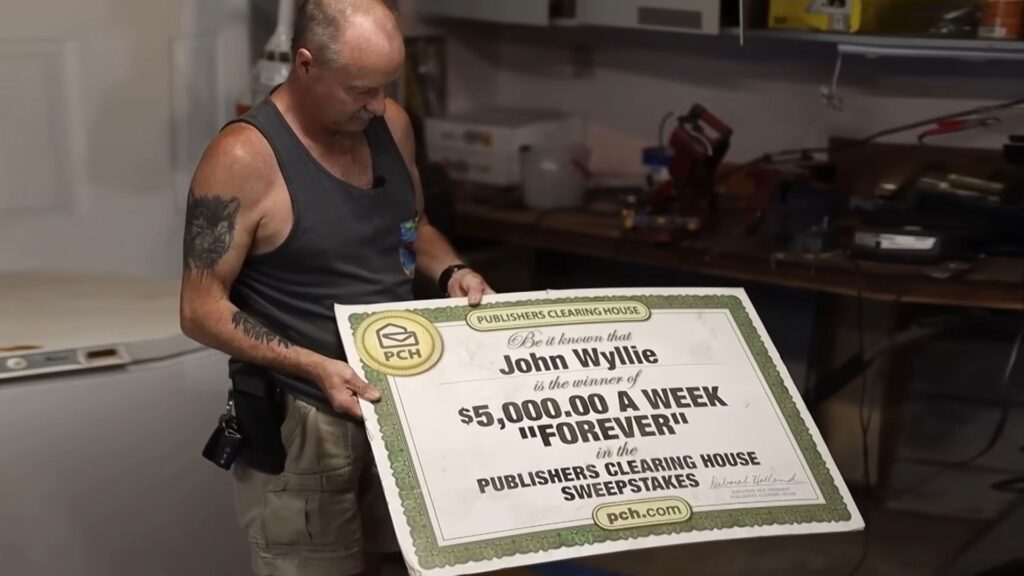
For people like John Wyllie of Washington, the collapse feels like betrayal. In 2012, the Prize Patrol showed up at his door with balloons and cameras, handing him a check for $5,000 a week for life. He quit working, confident the checks would carry him into old age.
But when his $260,000 annual payment didn’t arrive this past January, reality hit. “Why didn’t somebody give me a heads up?” Wyllie told CNN affiliate KGW. “Pretty sure I’m going to lose my home.”
Disabled veterans Matthew and Tamar Veatch, who won the same prize in 2001, are also bracing for change. “You change people’s lives, and now you messed it up,” Tamar said. For Matthew, the loss feels like a breach of trust. “The big letdown for me is that we trusted them,” he said.
Bankruptcy and the Sale to ARB
Publishers Clearing House filed for Chapter 11 bankruptcy in April 2025, reporting more than $65 million in liabilities and less than $12 million in assets. Its revenue had collapsed — from $854 million in 2017 to $182 million in 2023.
In July, Miami-based ARB Interactive bought the company’s assets for $7.1 million and launched a new platform, PCH Digital. ARB says it will honor all future prizes, but only those awarded after July 15, 2025. Past winners, the ones most people remember seeing on TV, have been left dumped.
From Basement Startup to Pop Culture Icon
The story began in 1953, when Harold Mertz, a former magazine salesman, started the company out of his Long Island basement with his wife, LuEsther, and daughter, Joyce. The first mailing went to 10,000 homes and offered 20 magazines. A hundred people signed up.
By 1967, PCH added sweepstakes to attract more attention, handing out prizes as small as a dollar. But the stakes grew. By the late ’70s, prizes reached thousands, then millions. In 1989, the Prize Patrol was born, inspired by the old TV show The Millionaire. Suddenly, America was hooked.
The Prize Patrol became part of pop culture. They were spoofed on Saturday Night Live, referenced on Seinfeld and Cheers, and even worked their way into a joke by President George W. Bush. Announcing the $10 million prize after the Super Bowl became an annual tradition. For many Gen Xers, it was right up there with halftime ads.
Controversy and Scrutiny
But even as the dream grew, so did the controversy. By the 1990s, lawsuits accused PCH of misleading consumers, suggesting that buying magazines or merchandise could improve their odds. Investigators found discarded sweepstakes entries from non-buyers, fueling suspicion.
The company paid more than $82 million in settlements between 1999 and 2001. In 2010, it paid another $3.5 million to settle accusations that it violated earlier agreements. And in 2023, the Federal Trade Commission ordered PCH to stop deceptive practices, overhaul its sweepstakes, and return $18.5 million to consumers.
Even with these setbacks, PCH kept operating, transitioning online with PCH.com, PCH Games, and PCH Lotto. It even bought news sites like Topix and Wide Open Media, though those ventures fizzled by 2024.
Odds, Dreams, and Reality
Despite the marketing, the odds were always staggering. As of 2020, the chance of winning the $5,000-a-week prize was 1 in 6.2 billion. Still, millions entered, hoping against hope that a van would pull into their driveway.
By the time of its bankruptcy, PCH had handed out more than $500 million in prizes. Some winners got one-time checks, like Pamela Jonker, who won $1 million in 2020. Others, like the Veatches and Wyllie, counted on a lifetime of security that has now vanished.
The End of an Era
For many of 80’s and 90’s generation, the end of Publishers Clearing House feels personal. It’s not just about money — it’s about a cultural icon that defined part of their childhood and young adulthood. The envelopes in the mailbox, the TV commercials, the dream that they too could be set for life.
That dream is gone now. The vans won’t be coming. The checks won’t be written. And the promise of “forever” has turned out to be anything but.