
 Sylvie Belmond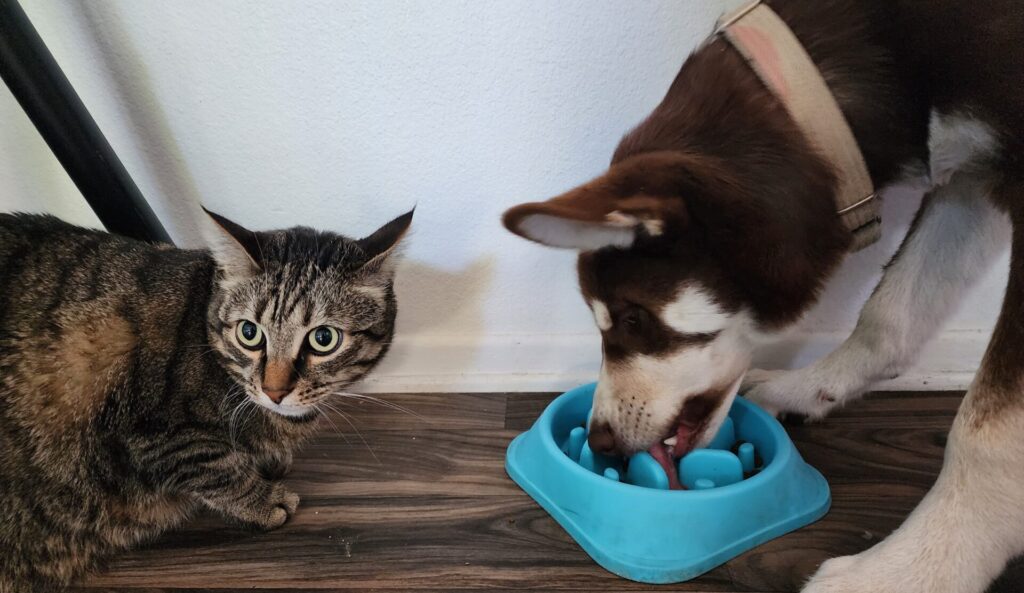
Denver & Juneau Image Credit: Sylvie Belmond
Pet Food Wars: Kibble, Cans or Home-Cooked—Which Bowl Wins?
(CLAIR | Simi Valley, CA) — Scroll through Instagram or TikTok and it’s hard to miss: dogs chowing down on rainbow bowls of veggies and salmon, cats licking gourmet pâté from crystal dishes. Pet food has become as much a social media trend as travel hacks or home cooking videos. But behind the filters and hashtags lies a real question for pet owners: what’s the best way to feed our furry companions?
In our family, we’ve landed on a mix of homemade meals and freeze-dried food for our young husky, Juneau. Like many rescues, he’s both resilient and spoiled in the best way. We’ll cook up chicken, salmon or tuna, mix in rice or sweet potatoes, and toss in carrots, peas or blueberries—one of his favorites. Everything goes into a pot or roasting pan with plenty of water, then blended into meals we portion out. It smells good enough that often we joke he’s eating better than we are. He even gets real bones, because for him, chewing is half the joy of eating.
We also share the kitchen with two rescue cats, Denver and Nala. They’re more finicky than Juneau and stick to their own rhythm. While they’ll happily steal bites of the chicken or fish we prepare for the dog, they’re not interested in the vegetables. We try our best to give them a balanced diet by mixing those shared proteins with high-quality cat food that provides the nutrients felines need. Cats are obligate carnivores, after all, and their diets are less flexible than dogs’.
Not all foods are safe, though. Grapes, onions, chocolate and other everyday items can be toxic. Even with fruits and veggies, owners need to check first what’s safe for dogs and cats before offering a bite. We’ve also learned from a trusted neighbor who rescued three huskies that are thriving—sometimes, the best advice comes from watching what works in other homes.
Not every household goes this route. Many pet owners rely on kibble or canned food. And there is nothing wrong with that. Dry food is convenient, budget-friendly and easy to store, though it can be low in moisture. Wet food, on the other hand, offers hydration and flavor, especially helpful for cats who aren’t big water drinkers. Then there are premium options like freeze-dried or fresh subscription meals, which claim to strike a balance between convenience and nutrition.
Each choice has pros and cons. Vets say what matters most is that a diet is “complete and balanced,” meaning it delivers all the nutrients a dog or cat needs for their age, size and activity level. Puppies and kittens need different fuel than seniors; big breeds grow differently than small ones. Cats, as obligate carnivores, require certain nutrients found only in animal protein—taurine, for one, according to the American Veterinary Medical Association.
Social media influencers make feeding pets look easy, from raw-food advocates who swear by meaty bones to pet chefs whipping up kale-and-chicken blends. Their posts can inspire, but vets caution that not all homemade recipes online meet nutritional standards. Like anything online, owners need to use their own judgment—don’t just believe everything you see.
The same goes for training. Pet owners offer clever tricks and positive reinforcement methods. Still, what works for one dog might not work for another. Breed, temperament and environment all matter.
For us, cooking Juneau’s meals and blending that with some high quality freeze-dried food—and making sure Denver and Nala get what they need—has become part of family life. It takes planning and a bit of time, but the payoff is shiny coats, steady energy and happy pets at mealtime. Every owner has to find what works for their lifestyle, their budget and, most importantly, their animals.
Because in the end, whether it’s kibble, canned, freeze-dried or homemade, the real reward is the look in their eyes when the bowl hits the floor.

Feeding Pets Safely
Foods to Avoid (AVMA)
- Dogs: grapes, raisins, onions, garlic, chocolate, xylitol (sweetener), cooked bones
- Cats: onions, garlic, chocolate, alcohol, caffeine, raw dough
- Both: fatty trimmings, spoiled food, large amounts of dairy
American Animal Hospital Association, WSAVA Guidelines
- Look for “complete and balanced” on food labels (AAFCO standards).
- Match food to life stage: puppy/kitten, adult, senior.
- Cats need moisture—wet food helps prevent urinary issues.
- Monitor body condition, not just weight. Adjust food if your pet is getting pudgy or too thin.
- Homemade diets can be healthy but should be guided by a veterinary nutritionist to avoid deficiencies.
- Raw feeding carries risks of Salmonella and E. coli for both pets and people. Handle with care or consider cooked alternatives.
Just for Fun
- @tikanni.kita.n.tehya.3.sibes (on Instagram) — Her videos are truly funny, and a nice way to start the day.
- WooFDriver — (also on Instagram) A quirky account that blends adventure, huskies and a homemade sled that could work in Simi Valley on the Arroyo Greenway path if you own multiple sled dogs.
💬 We’d love to hear from you: What do you feed your pets, and which social media accounts brighten your day or give you helpful advice about animals? Share with us in the comments.