
Americans Drink More Water Than Ever — So Why Do We Feel So Dehydrated?
 Daniel Jordan
The Great Hydration Paradox: Why Are We Always Thirsty?
(CLAIR | Simi Valley, CA) — You drink your first glass before coffee. You keep a bottle beside your bed, another in the car, and one at work. You refill it all day long, tracking ounces, convinced that you’re doing the right thing. You’ve done what every wellness article, doctor, and social media post says you should do — drink more water.
Yet somehow, you still feel thirsty.
Your lips are dry. Your skin feels tight. You wake up in the middle of the night reaching for another sip. You tell yourself it’s stress, or the weather, or maybe caffeine. But what if it’s something simpler? What if the problem isn’t how much water we drink — but the kind of water we’re drinking?
A Nation That Drinks More Than Ever
Forty years ago, few people carried water around. You drank from the tap. Sometimes from the hose. Nobody thought of it as a lifestyle choice.
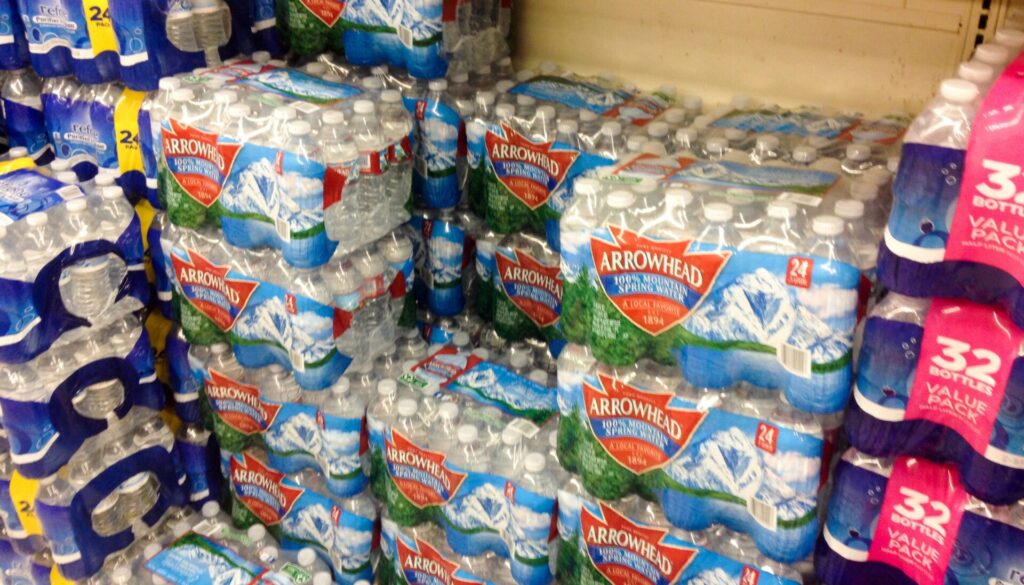
Today, bottled water has become the most popular beverage in the United States. Americans now buy nearly 16 billion gallons of bottled water each year — more than soda, more than juice, more than coffee. The industry earned $47 billion in 2024, and continues to grow.
What’s remarkable is that this transformation happened in a single generation. How did a product that once flowed freely from every kitchen sink become a multi-billion-dollar industry?
The Business of Bottled Water
The shift didn’t happen by accident. In the late 1970s and early 1980s, major beverage corporations faced a problem. Soda sales were beginning to plateau. Consumers were growing wary of sugar, calories, and artificial additives. Companies like Coca-Cola and Pepsi needed a new product — something that could be marketed as healthy, universal, and essential.
They found their answer in water.
Coca-Cola launched Dasani in 1999. Pepsi introduced Aquafina. Nestlé expanded its Pure Life brand across the country. All three companies used a similar business model: take municipal tap water, filter it through reverse osmosis, and sell it as “purified” water.
The result? A product that cost fractions of a cent to produce could now be sold for more than gasoline — marketed as “pure,” “safe,” and “essential for wellness.”
Was this smart business, or something more calculated?
When Purity Became a Product
The rise of bottled water coincided with growing public anxiety about tap water. News stories about lead, contamination, and chlorine gave bottled brands an opening. Corporations positioned themselves as the safe alternative.
But what if the marketing of “purity” was less about safety — and more about control?
When water becomes a branded product, purity becomes something to sell. And when you strip it of minerals to make it last longer on the shelf and taste more consistent, you also strip away some of what makes it truly hydrating.
It raises a difficult question: in the pursuit of profit, did we turn the world’s simplest, most necessary resource into something less effective for the human body?
What Purity Leaves Behind
Most bottled water isn’t from pristine mountain springs. It’s filtered city water, stripped of chlorine, fluoride, and bacteria — but also of the minerals our bodies use to absorb and hold moisture. Calcium, magnesium, potassium, and sodium once gave tap water its flavor and function.
When we remove them, we end up with something ultra-clean but biologically incomplete. It’s water that quenches briefly but doesn’t linger — the difference between filling a bucket and actually soaking the ground.
The Science of Absorption
True hydration depends on osmosis — the movement of water across the intestinal wall, guided by electrolytes. Without minerals, that process becomes less efficient.
Medical research has long shown that water combined with sodium and glucose hydrates the body more effectively than plain water alone. That’s the principle behind oral rehydration solutions, used in hospitals and emergency care.
So if electrolytes help water enter the bloodstream, and bottled water lacks them, are we hydrating less effectively than we think?
The Modern Hydration Loop
Across gyms, offices, and sidewalks, people carry oversized water bottles everywhere they go. Hydration has become a symbol of self-care. Yet so many still feel dry, lightheaded, or fatigued.
When you drink large amounts of mineral-free water, your body senses the drop in sodium concentration and reduces production of vasopressin, the hormone that tells your kidneys to hold water. You urinate more, your blood sodium rebalances, and your brain tells you to drink again.
It’s a self-perpetuating cycle — thirst, drink, flush, thirst again.
Could This Have Been the Plan?
Maybe it wasn’t deliberate. Maybe it was just a byproduct of marketing.
But consider the outcome: corporations now sell billions of gallons of water each year, much of it drawn from public sources. They’ve convinced consumers to pay for what used to be free — and to keep buying more of it because the very product they sell might not fully satisfy the need it’s meant to meet.
That’s not a conspiracy. It’s just good business. But it also raises a haunting possibility: have we been conditioned to stay thirsty?
What We Lost in the Pursuit of Purity
We filtered out chlorine and contaminants — important improvements, no doubt. But in the process, we also filtered out calcium, magnesium, and other trace minerals. Those elements once made water naturally hydrating.
Our grandparents’ water wasn’t perfect, but it worked. Today’s water is cleaner, but perhaps less useful.
If the most profitable version of water is also the least hydrating, that’s not just a health issue. It’s a question about how commerce reshapes even our most basic biological needs.
The Cost of Convenience
Bottled and filtered water fits our lifestyle — mobile, fast, sterile. But convenience often comes with unseen tradeoffs.
If we’ve replaced real hydration with the illusion of it, what else might we be losing? Energy? Focus? The quiet balance our bodies once maintained without effort?
If the cleanest water in history leaves us chronically thirsty, maybe the problem isn’t personal at all. Maybe it’s systemic — the result of decades of marketing that convinced us to abandon a free resource in favor of something we now buy by the case.
Asking the Right Questions
Could restoring minerals to our water — even a small amount — make a difference? Would people drink less but feel better?
Could it be that our chronic thirst is not a failure of habit or discipline, but the predictable result of treating water as a consumer product instead of a biological necessity?
These aren’t conspiracy theories. They’re questions worth asking — because they touch the most fundamental human need of all.
The Paradox of Progress
We made water cleaner, safer, and easier to sell. But in perfecting it, we may have stripped away something essential.
What if the answer to our constant thirst isn’t in drinking more — but in drinking smarter? What if the solution to the modern hydration crisis isn’t another brand or bottle, but simply a return to balance?
The next time you take a sip, think about what’s in your glass — and what’s missing from it.
Because sometimes, the simplest things we take for granted — like water — are the ones most worth questioning.