
What If the Shutdown Isn’t a Crisis at All — But a Plan to Collapse the Insurance Industry and Start Over?
 Daniel Jordan
The Hidden War Behind the Shutdown: Is America’s Health System Being Rebuilt on Purpose?
(CLAIR | Ventura County, CA) — Why is the U.S. government really shut down? Because this time, Congress isn’t simply passing the familiar stop-gap “continuing resolution” (CR) to keep the lights on until a full budget gets hammered out. Instead, lawmakers are demanding massive structural changes and spending realignments — worth trillions of dollars — before they’ll approve anything.
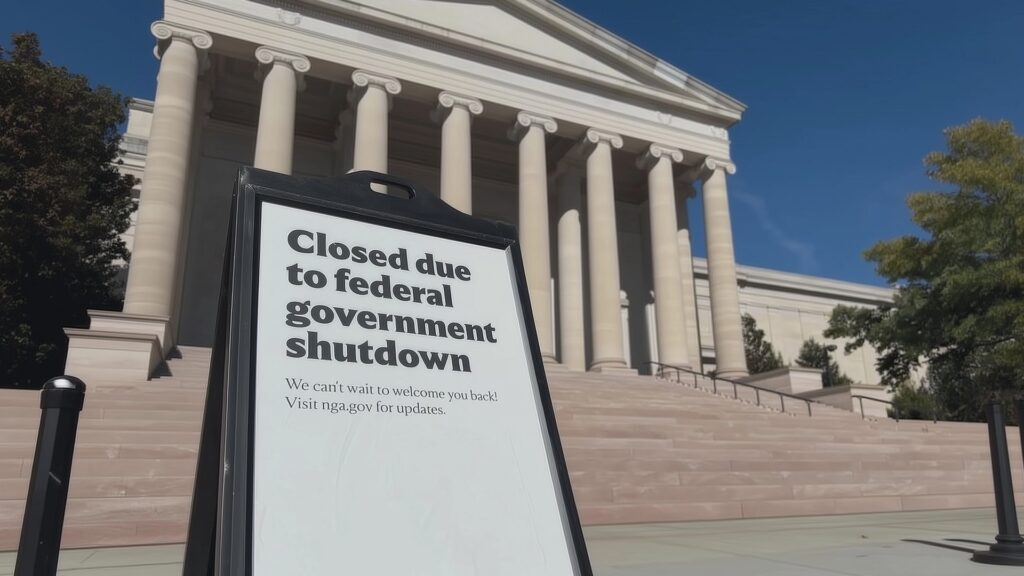
This is what brinkmanship looks like in 2025: one chamber passes a temporary resolution to maintain funding at current levels, while the other rejects it unless sweeping new items are added — policy riders, spending cuts, or large-scale reallocations. When the sides refuse to bend, the clock runs out and the government shuts down.
It’s not about logistics anymore. It’s about leverage. This year’s demands are unprecedented. Lawmakers are tying everything — defense budgets, border policy, climate spending, and healthcare funding — into a single massive argument over who controls the nation’s flow of money. Once a “clean” CR passes, it becomes almost impossible to force major fiscal changes later. So for many legislators, this moment isn’t a delay tactic — it’s their only chance to rewrite the rules before the next election cycle locks the system in again.
That’s why this shutdown feels different. It isn’t just about fiscal discipline or political theater. It’s about reshaping the architecture of federal spending itself, including the financial arteries that feed one of the largest and least understood sectors of the economy: healthcare.
And that brings us to the central question…
The Big Question: Is This All by Design?
Step back from the noise and ask the question that cuts through every press release, every soundbite, and every floor speech:
Is this crisis accidental — or is it strategic?
Because when you look closely, the fight over the renewal of the Affordable Care Act (ACA) doesn’t just threaten to disrupt the health-insurance market — it threatens to rebuild it.
If the enhanced subsidies expire and millions lose affordable coverage, the entire individual-market insurance system could collapse under its own weight. Premiums would skyrocket, insurers would exit unprofitable regions, and what remains could be unsustainable. In other words, the shutdown brinkmanship could become a controlled demolition — one that forces policymakers to rebuild the system from the ground up.
And that raises the possibility no one wants to say out loud: maybe this isn’t about saving or killing the ACA. Maybe it’s about replacing the entire business model that has defined American healthcare for half a century.
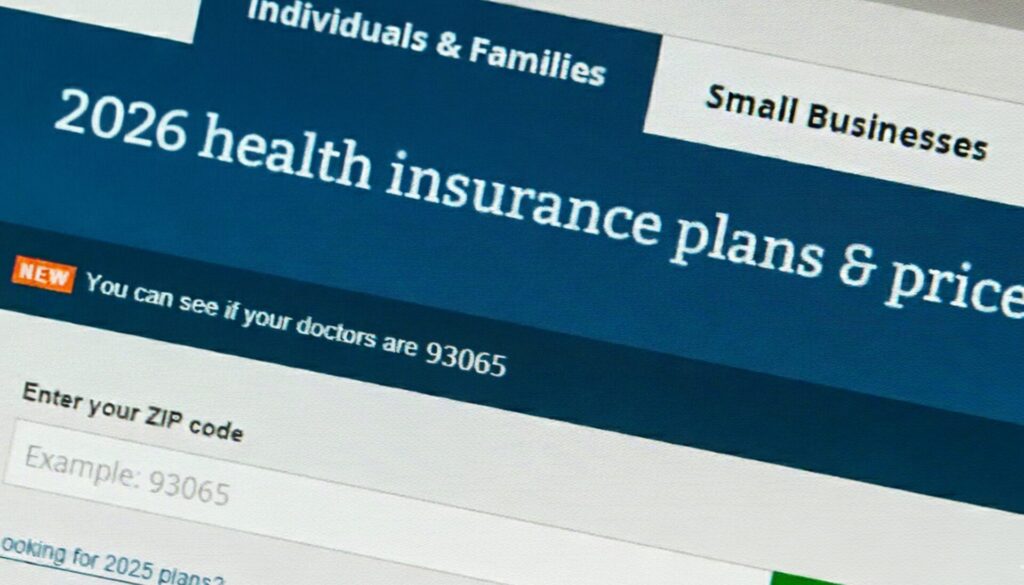
If insurers can’t survive without constant Treasury infusions, the government might argue it’s time for a more direct approach — whether that means a public option, single-payer expansion, or a new hybrid model that cuts private insurers out of the guaranteed-profit loop altogether.
And if that happens, the fight over subsidies and shutdowns will be remembered not as a budget battle, but as the first move in a long, deliberate campaign to reshape how healthcare money flows in America.
The ACA’s Financial Engine: A Government Lifeline in Corporate Hands
The ACA was designed to make health insurance affordable for ordinary Americans. But its mechanics do more than that — they guarantee private companies a steady, government-backed income stream.
Each month, the U.S. Treasury pays billions in premium subsidies directly to insurers on behalf of enrollees. Those payments arrive whether or not the individual could have afforded the policy on their own. To insurers, that money is as reliable as a defense contract.
What began as a healthcare law gradually evolved into a financial symbiosis between Washington and Wall Street. Insurance companies deliver the coverage; the government delivers the cash. Investors, in turn, reward the predictability — steady revenue, low risk, and dependable quarterly returns.
The Hidden Profit Machine
In the pre-ACA world, the individual insurance market was a gamble: too few buyers, too many sick patients, and too much uncertainty. The ACA changed that overnight by eliminating much of the risk.
The subsidies guaranteed participation — millions of new customers, paid premiums on time, every time, courtesy of the U.S. Treasury. And while the ACA limits profit margins through the “medical loss ratio” rule, that cap applies to a much larger revenue base. Even at modest margins, profits ballooned because volume soared.
Between 2014 and 2022, insurers like Molina Healthcare, Centene Corporation, and Elevance Health saw explosive growth. Share prices climbed. Earnings calls spoke less about “coverage expansion” and more about “risk-pool stability” and “predictable government revenue.”
For investors, it was a dream: a publicly traded sector built on guaranteed government payments — private in form, public in substance.
The Shutdown and the Edge of the Cliff
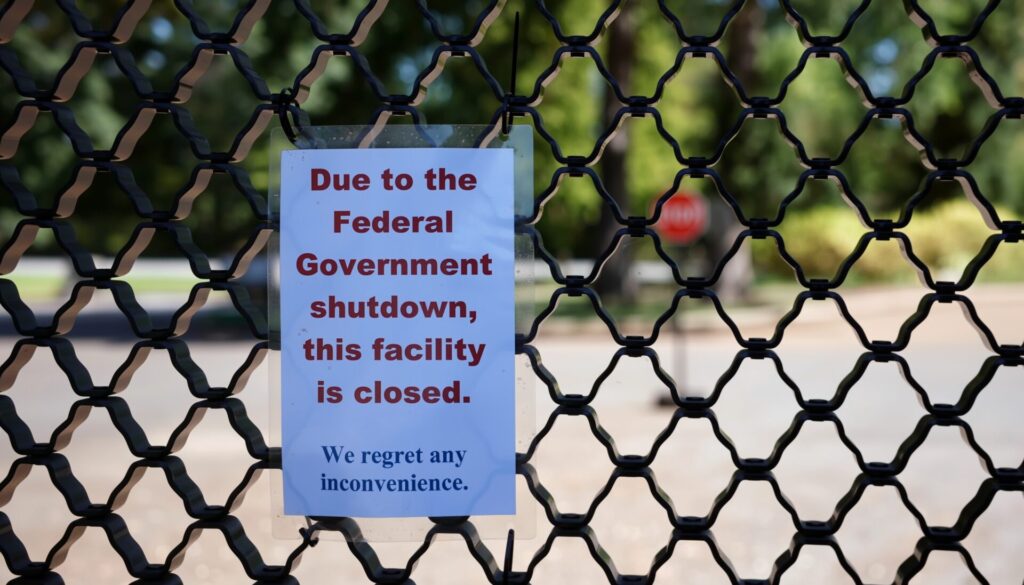
The current political standoff over funding has put that guarantee at risk. The enhanced ACA subsidies, extended temporarily under pandemic-era legislation, expire at the end of 2025 unless Congress renews them.
If the subsidies lapse, the fallout will be immediate:
- Millions of Americans will lose affordable coverage.
- Insurers will lose a substantial share of their revenue base.
- Investors will lose faith in what has been one of the market’s most reliable sectors.
To call that a “policy change” is an understatement. For insurers, it would be a financial earthquake — a sudden evaporation of cash flow from their largest single payer: the U.S. government.
When the Payments Stop
Here’s what happens when the Treasury’s checks stop coming:
- Revenues Collapse
Insurers rely on those federal payments to stabilize pricing. Without them, millions of customers can’t afford premiums and drop coverage. Insurers lose billions in guaranteed monthly revenue. - Balance Sheets Erode
The accounts receivable from the federal government — treated as near-cash assets — disappear. Capital reserves thin, debt ratios rise, and credit agencies issue downgrades. Liquidity dries up. - Profitability Vanishes
Administrative costs don’t scale down quickly. Claims costs stay high as only sicker individuals remain insured. The margin vanishes; profits turn to losses. - Stock Prices Crash
Publicly traded insurers face a market reckoning. Investors, realizing the guaranteed-government pipeline is gone, dump shares. Healthcare-sector ETFs tumble, wiping out billions in market value. - Credit and Financing Freeze
With downgraded ratings, insurers pay more to borrow or can’t refinance existing debt. Dividends and buybacks stop. Investor flight accelerates.
What follows is not a slow erosion but a rapid repricing of risk across the entire healthcare finance ecosystem.
A Glimpse of What’s Coming: The Risk-Corridor Precedent
We’ve seen this movie before. When the federal government halted “risk-corridor” payments in 2014, meant to protect insurers from early ACA losses, several companies collapsed. The Supreme Court later ruled the government owed $12 billion in back payments — but by then, the damage was done.
That was a tiny fraction of what’s now at stake. If the enhanced subsidies vanish, we’re not talking about billions — we’re talking hundreds of billions in annual market exposure. The difference is scale — and the fact that this time, the markets have built an entire investment strategy around the assumption that those payments will never stop.
Investors’ Hidden Dependency
To the average investor, healthcare insurers look like safe bets — steady earnings, predictable cash flow, strong dividends. But that illusion depends entirely on government continuity.
The Treasury’s guaranteed payments have effectively financialized the ACA, transforming it from a social policy into an investment product. When the payments stop, so does the illusion of permanence. Institutional investors — pension funds, mutual funds, ETFs — hold massive positions in ACA-heavy insurers. If those stocks plunge, the impact will ripple far beyond the healthcare sector, touching retirement funds, bond markets, and municipal investments.
The Quiet Truth
If ACA payments end, it won’t just hurt patients. It will hit insurers, investors, and financial markets with the force of a sudden cardiac arrest. The government may reopen, but the trust that underpins this entire system — the belief that Washington will always protect the cash flow behind healthcare — would be gone.
The shutdown, then, isn’t just about politics. It’s a battle over the financial soul of the American healthcare system — a test of how far the country is willing to go to defend an illusion of market independence that, for over a decade, has been quietly funded by the taxpayer.