Missed the Simi Valley Candidate Debate? Here’s a Clear Breakdown of What Was Said
 Daniel Jordan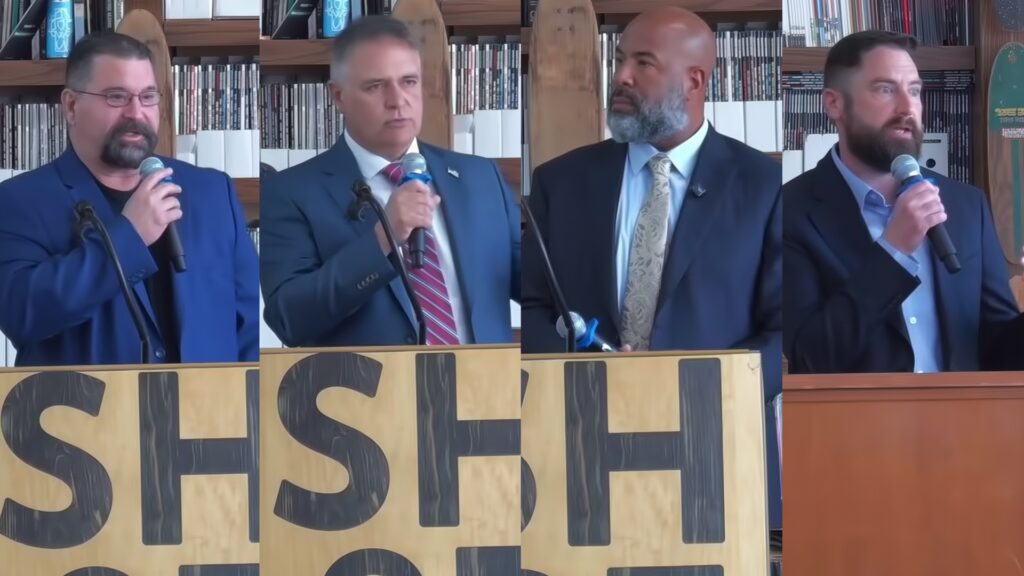
(CLAIR | Simi Valley, CA) — Last weekend, U Cast Studios hosted the Benergy Candidate Debate and Forum at Simi Valley’s Skateboarding Hall of Fame. To help readers follow the full scope of the conversation, CLAIR reviewed the official transcript and reconstructed the discussion into a clear, organized summary of the questions and themes explored throughout the event.
Section I: The Lead – Perspectives on Simi’s Next Chapter
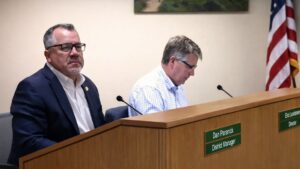
The atmosphere at the Candidate Forum was a deep dive into the heart of Simi Valley’s future. This was a candid gathering of local leaders and hopefuls under the roof of a local business, emphasizing the stakes for the city’s economic and social health. The event featured mayoral candidate Mike Judge, District 1 candidate Anthony Thompson, and District 2 candidates Richard Perini and Sam Cohen. What began with formal introductions quickly evolved into a high-energy strategy session regarding the city’s direction.
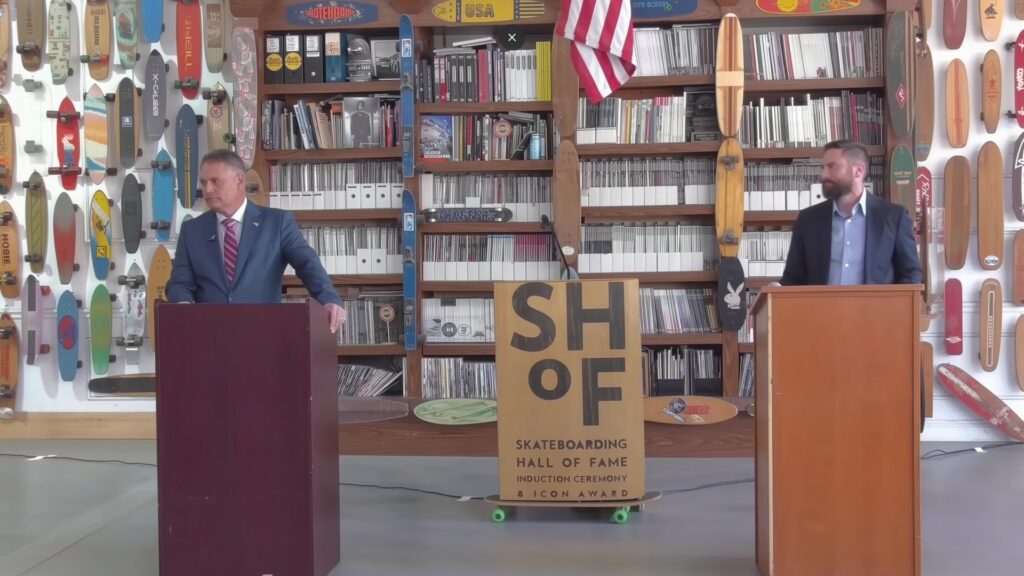
The conversation explored the core of what it means to live and work in the valley today. The candidates provided an unfiltered look at a city navigating its next chapter—balancing its unique “small-town” character with the evolving high-tech and housing demands of the 21st century. From shared local business “war stories” regarding red tape to ambitious plans for turning the west end into a regional sports destination, the forum painted a picture of a Simi Valley that is actively fighting to define itself on its own terms rather than letting outside mandates dictate its future.
Key Timestamps:
- Moderator’s Forum Opening: [00:06:50] — “Thank you for coming today and participating and hearing us out on what our views and stances and opinions are on how to make the city a better place.”
- The “Why Run?” Question: [00:07:10] — The moderator sets the tone by asking the candidates to explain their personal motivation for seeking office and what they hope to represent for the community.
- Richard Perini’s Response: [00:07:17] — “My purpose for running is to gain exposure to a wonderful city and the highs of it… I’m running for a better future for our city, my family and your families as well.”
- Sam Cohen’s Response: [00:08:28] — “I’m running because it’s where I’m raising my child and it’s where I’ve invested years of dedicated [service]… it’s where I have a home and it’s where my service is.”
Section II: District 2 – The Branding, Housing, and Infrastructure Debate
The first formal segment of the forum centered on the race for City Council District 2, featuring an in-depth exchange between Richard Perini and Sam Cohen. This wasn’t just a discussion of policy, but a debate over the city’s fundamental identity—shifting from how Simi Valley presents itself to the world to how it manages the literal nuts and bolts of its streets and housing.
The “Simi Brand” and Economic Exposure The candidates wrestled with how to elevate Simi Valley’s reputation to attract higher-tier industries.
- The Question: The moderator asked what specific industries or technology the candidates would target to improve the city’s image and economic standing.
- Sam Cohen: Cohen pointed to a broader spectrum of future-proof industries, emphasizing that the city must protect its current industrial zones to allow for the long-term growth of specialized sectors. “There are industries that are interested here: life sciences, healthcare, space, software engineering. These are industries that are long-term success… and those are [what we need to protect].”
- Richard Perini: Perini argued that Simi Valley is suffering from a “branding issue,” failing to capitalize on its high-tech history. He specifically cited the city’s role in aerospace and defense, noting that the community was the home to signal-jamming technology used to protect troops overseas.“We have a branding issue. We need to change that branding issue to attract these larger businesses… this was also the home to jam—when our troops were overseas they would jam those IEDs… we have a lot to boast, a lot to write about… tech, aerospace… manufacturing could be here.”
Housing and the “Sacramento Squeeze” A significant portion of the debate focused on the friction between state-mandated housing growth and the desire to maintain Simi’s suburban character.
- The Question: The candidates were asked to address the rising cost of housing and how the city should handle aggressive state housing mandates.
- Sam Cohen: Cohen advocated for a balanced approach, suggesting that while the city must meet its legal obligations to provide housing for all stages of life, it can use “objective design standards” to ensure new builds don’t clash with the city’s aesthetic.“We have an obligation to our residents to provide a variety of housing options for every stage of life… we can use what’s called objective design standards… so even as we fulfill that [state requirement]… we don’t lose that character.”
- Richard Perini: Perini took a more critical stance on state interference, warning that Sacramento’s push to convert industrial land into residential units could permanently damage the city’s tax base and job market.“Sacramento has pretty much stripped the city from being able to do what we like to do. We have to fall into the confines of Sacramento’s legislation… we have to see every piece of industrial we have for economic development for long-term jobs.”
Traffic and “Smart” Infrastructure The segment concluded with a focus on daily quality of life, specifically how to handle the city’s aging infrastructure and traffic flow.
- The Question: The moderator asked: “What is the one area of the infrastructure related to traffic that you think deserves the most attention?”
- Richard Perini: Perini leaned into a technology-first solution, arguing that “Smart” traffic signals could alleviate the frustration of residents sitting at empty intersections.“I’m going to see traffic lights. They make smart traffic lights work where you can sit there and watch a left turn lane for 2 minutes and there’s no one in… that would be the simplest.”
- Sam Cohen: Cohen shifted the focus to the age of the city’s core infrastructure, noting that a vast majority of the city’s systems are decades old and require fundamental, long-term repairs rather than just software updates.“92% of the city’s infrastructure is over [a certain age]… traffic infrastructure becomes a security issue for drivers… [we need] infrastructure improvements that last years.”
Section III: The “Red Tape” War Stories – A Strategy Session for Growth
The final segment of the forum shifted gears from a formal debate into a three-way discussion between Mayoral candidate Mike Judge, District 1 candidate Anthony Thompson, and District 2’s Richard Perini. This portion of the evening was marked by a shared focus on the practical, often frustrating realities of doing business in Simi Valley, evolving into a collaborative brainstorming session on how to prune the city’s bureaucracy.
Bureaucracy and the Business “Bleed” The conversation hit a peak when the candidates shared specific examples of how local permitting processes can stifle economic growth.
- The Question: The candidates were asked to identify the specific policy changes they would prioritize to improve the daily life and economic viability for residents and business owners.
- Anthony Thompson: Thompson introduced a firm stance against administrative delays, coining the phrase “Open for business, closed for bureaucracy.” He shared a stark example of a local indoor golf simulation business currently struggling through the permitting phase.“I was reached out [to] by the owners of the new indoor simulation golf… they’re having a hard time. This business is bleeding $10,000 a month… the sooner [the city] can start operating in the gray instead of operating in the black and the white, we can start bringing businesses in here.” [01:47:02]
- Richard Perini: Perini grounded the discussion in the reality of land use, sharing a “war story” about the excessive time required for simple zoning transitions that leave commercial properties vacant and expensive.“If you have a parking lot and you’re parking containers on it and now you’re going to switch it to cars… I think it’s 7 months in county so you got to pay rent on a facility for 7 months for the city to make a decision. I don’t find that acceptable. I don’t find that business friendly.” [01:49:09]
The West End Sports Complex: A Regional Vision The panel discussed the potential for a major infrastructure project on the city’s west end, framing it as both a community asset and a revenue generator.
- The Question: The panel was asked about what specific infrastructure could attract youth and make the city more appealing to families.
- Mike Judge: Judge provided details on a significant city-owned asset—a 20-acre lot on the west end—that is slated to become a multi-use sports hub.“The city owns a large vacant lot out on the west end of town… it’s about 20 acres. … The plan was to have that sports complex out there. We want to have baseball fields, lacrosse fields, soccer fields, we want to have softball fields.” [01:55:17]
- Richard Perini: Perini expanded on the economic ripple effect of such a complex, arguing that it shouldn’t just be for local use, but should be designed to host large-scale regional tournaments.“I’d love to see multiple soccer fields to have tournaments. That would put people in our restaurants; that would put people in our hotels. … Hosting these local tournaments… there’s big, big money in it.” [01:50:53]
Economic Self-Reliance and the Utility Debate As the forum wound down, the discussion turned toward the city’s long-term independence, specifically regarding energy and utility costs.
- The Question: The moderator asked how the city should approach its relationship with major utility providers like Edison.
- Richard Perini: “I definitely would love to be in the energy game because that’s the only way we can market in our future. … If you leave it up to Edison, we’re just a redheaded step[child]. … As far as the loss that we have from a lack of power, it is tremendous.” [01:30:36]
- Mike Judge: Judge expressed a similar desire for local control, emphasizing that the city needs to look toward its own infrastructure to mitigate the influence of larger, less responsive corporations.“Utilities and power… it’s like spitting in the wind. Edison’s too big and they really don’t care about us. We have to do our own infrastructure, whether it’s putting our own generators in [or] utilizing the natural gas of the land.” [00:28:26]
Section IV: Closing Remarks – The Personal Side of Public Service
The forum concluded not with policy debates, but with personal reflections on what makes Simi Valley home and why each candidate is driven to lead. This final segment offered a window into the values and histories that shape their visions for the city’s future.
The “Why Simi?” Question In a shift from technical policy, the candidates were asked to share what keeps them rooted in the community.
- The Question: The moderator asked candidates to reflect on their personal connection to Simi Valley and why it remains their home.
- Anthony Thompson: Thompson shared a personal anecdote about his family’s decision to move to the city, framing it as a place of refuge and stability.“My wife… said ‘You know what? We’re going to Simi Valley.’ I said ‘Why Simi Valley?’ She says ‘Because when things get bad, you go home.’ … Simi Valley has always been my home.” [01:41:19]
- Richard Perini: Perini spoke to the physical and emotional relief he feels when returning to Simi from the faster pace of Los Angeles.“Coming from Los Angeles… 80 miles [of stress] get off my shoulders [when I get home]. … I think we have a great community; I truly believe that. … I just see a neglect of our economic development side, and that’s what concerns me.” [00:43:31]
- Sam Cohen: Cohen emphasized the city’s deep-rooted culture and historical identity as its greatest asset.“Every time I see [this city], it’s the same reason that I see over and over again. … We have 60 years of character and culture built up here… this amazing history.” [00:44:08]
Final Call to Action: A Unified Path Forward The candidates closed the evening by summarizing their final “pitch” to the voters, focusing on transparency, economic growth, and the next generation.
- The Closing Statements: Candidates were given time for final thoughts and to direct voters to their resources.
- Richard Perini: “My slogan is ‘Why not Simi?’ … I’d like to bring my talent, my knowledge, my connections to enhance our city opportunity and grow an economic development committee that is not city-based.” [00:48:23]
- Sam Cohen: “I want to make [this city] for the next generation. I want to give them the choices to make that same choice… we need a safe and transparent community.” [00:48:58]
- Anthony Thompson: “The market should dictate prices, not the government. … My biggest priority would be that [economic] development… we have to grow our tax base.” [01:43:53]
- Mike Judge: Judge reiterated his commitment to maintaining the city’s fiscal health while expanding recreational assets.“I plan to make sure [taxes] stay the way they are, and I think that would benefit the citizens of Simi Valley more than anything else… [along with] the sports complex out there.” [01:45:25]
Conclusion for CLAIR.ID
The Benergy Candidate Forum provided more than just a list of campaign promises; it provided a roadmap for how these leaders intend to protect Simi Valley’s heritage while modernizing its economic engine. From the high-tech potential of its industrial zones to the grassroots investment in youth and sports, the evening underscored a singular theme: the city is ready to take charge of its own destiny.
Editor’s note: The publicly available audio from the forum is of extremely poor quality. CLAIR made every effort to accurately transcribe and reconstruct the discussion using the best available tools and careful review of the transcript. It is possible that minor errors occurred. Candidates who notice any inaccuracies are encouraged to contact CLAIR, and prompt corrections will be made.