
Recognizing Black History in Simi Valley Is About Presence, Not Numbers
 Sylvie Belmond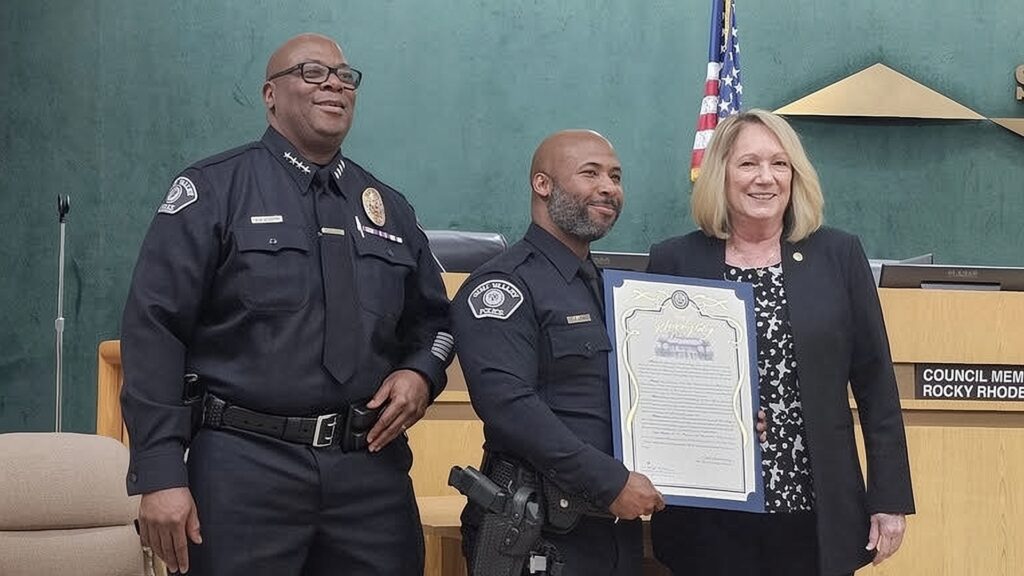
For residents whose families have lived and contributed to Simi Valley for generations, the annual proclamation affirms their place in the community and acknowledges a history built through everyday life, work and service.
(CLAIR | Simi Valley, CA) — The Simi Valley City Council marked February as Black History Month at its Monday meeting, with a proclamation read by Simi Valley Police Chief Steve Shorts
SVPD Officer J. King accepted the proclamation following the reading.
The declaration traced the observance to 1926, when historian Carter G. Woodson began a February celebration aligned with the birthdays of Frederick Douglass and Abraham Lincoln to recognize the contributions of Black Americans. It also noted that every U.S. president since Gerald Ford has designated February as Black History Month.
This year’s national theme, A Century of Black History Commemorations, focuses on the role of work and labor in shaping the Black experience and advancing equality — a reminder that history is built not only through landmark moments, but through daily effort, service and persistence.
In Simi Valley, that recognition carries particular weight. According to the 2020 Census, Black or African American residents make up roughly 1 to 2 percent of the city’s population, an estimated 1,800 to 2,000 people in a city of more than 126,000. The number is small, but the presence is real.
Black residents have lived, worked and raised families in Simi Valley for decades, contributing to civic life, public service, faith communities and neighborhood networks. One visible reminder of that history is Second Missionary Baptist Church, a longtime congregation that has served as a place of worship and community gathering in the city.
The proclamation urges residents to reflect not only on national figures and milestones, but on the lived experiences of Black Americans whose work and sacrifice helped shape communities like Simi Valley.
By declaring February as Black History Month, the council acknowledged that history is not defined by percentages or census tables. It is defined by people, their labor and their lasting impact on the places they call home.