The Steps Required for Simi Valley’s Big “Sphere of Influence” Expansion Plan
 Sylvie Belmond
(CLAIR | Simi Valley, CA) — As Simi Valley considers a proposed annexation tied to the North Canyon Ranch development, city officials got clarity on how the process to change municipal boundaries works.
The North Canyon Ranch plan calls for 157 single-family homes and 50 multi-family units on 160 acres north of the Simi Valley Town Center. To proceed, the project would require annexation into the city.
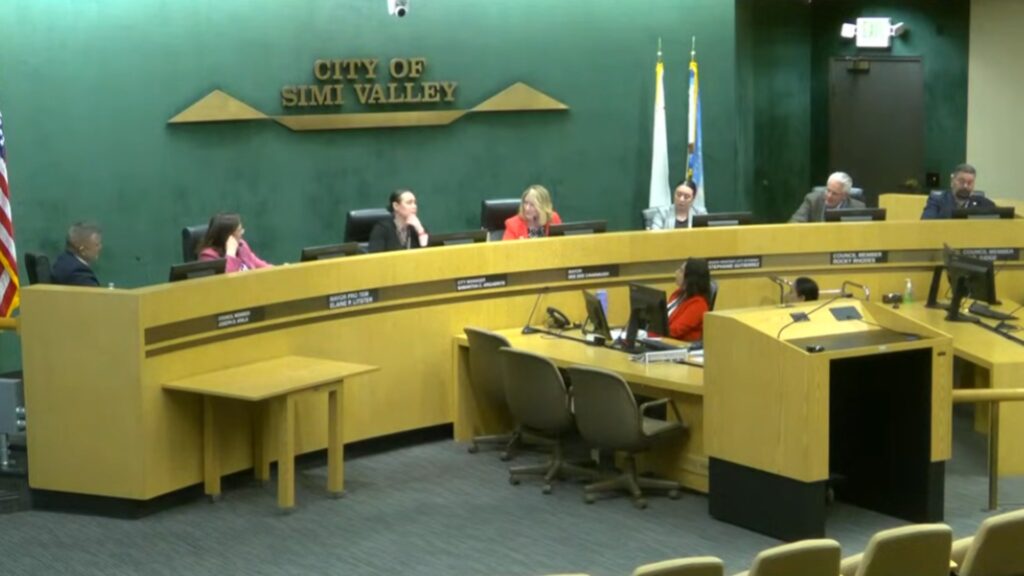
Speaking to the City Council Feb. 9, Ventura Local Agency Formation Commission Executive Officer Kai Luoma explained what LAFCO does, how annexations move forward and when residents have a voice.
Each of California’s 58 counties has its own LAFCO.
The state-created agencies’ primary role is reviewing and approving boundary changes such as annexations, detachments and the formation or dissolution of special districts. Decisions are final and are not appealable to another administrative body.
In Ventura County, the LAFCO is made up of two county supervisors — Janice Parvin and Jeff Gorell — two city council members — Jenny Crosswhite of Santa Paula and Bert Perello of Oxnard — two independent special district representatives — Raul Avila of Calleguas Municipal Water District and Chris Stephens of the Ventura Port District — and one public member, Gene Talmadge.
Alternates include Supervisor Matt LaVere, Susan Santangelo of Camarillo, Mohamed Hasan of United Water Conservation District and Joe Piechowski, a member of the Ventura County Community College District Board of Trustees.
Commissioners, Luoma said, must act independently and represent the interests of residents and the public as a whole, not the agency that appointed them.
LAFCO’s purposes include discouraging urban sprawl, preserving open space and prime agricultural land and promoting efficient delivery of government services, Luoma said.
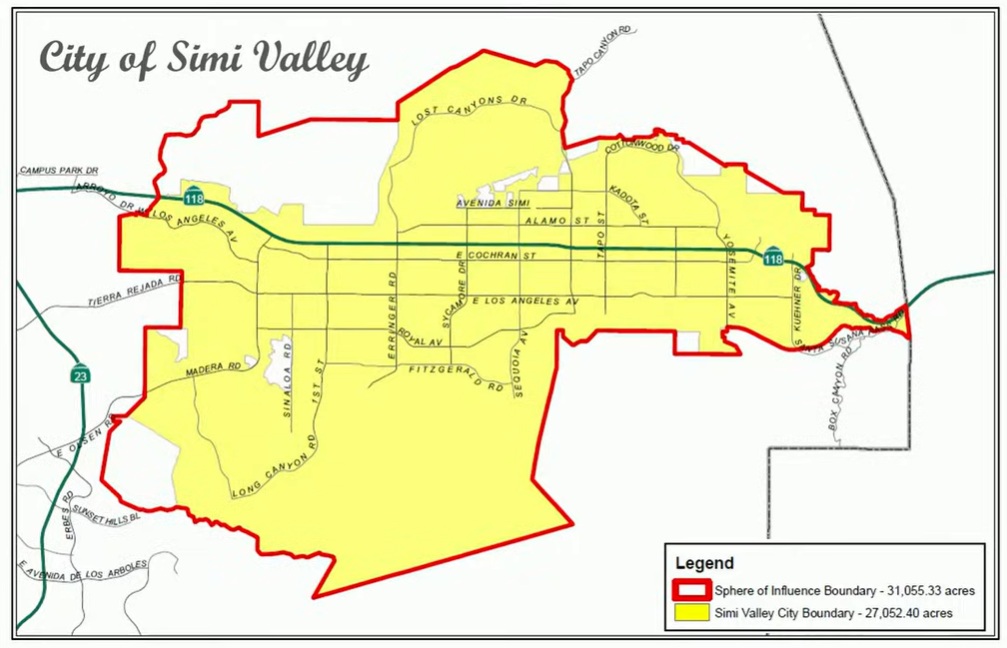
He described a “sphere of influence” as a planning line on a map that shows where a city is expected to grow and eventually provide services. LAFCO establishes these planning boundaries and reviews them at least every five years.
For Simi Valley, the sphere includes the unincorporated county land north of the Simi Valley Town Center and several unincorporated areas situated within municipal boundaries that could one day be annexed.
Being inside a sphere does not mean annexation is automatic, but it signals where growth could occur.
Before applying to LAFCO, a city must first approve a project’s land use plans, complete an environmental review, amend its general plan if needed and adopt zoning that would apply for the newly incorporated land.
Luoma said by the time LAFCO receives an annexation request, most planning and environmental decisions have already been made at the city level.
Once an application is submitted, LAFCO has 30 days to determine whether it is complete. If information is missing, the city has 90 days to provide it. Staff then reviews how services such as police, fire and utilities would be delivered and paid for and consults affected agencies.
The commission also holds a public hearing where residents may speak. Commissioners may approve the annexation, modify it, delay it or deny it.
If approved, there is a 30-day reconsideration period for new information that was not known at the time of the decision.
If 25% to 50% of voters or landowners in the affected territory protest, the annexation goes to an election of those in the area. If protests are below 25%, the annexation can move forward.
The islands issue
Councilmember Elaine Litster asked about the unincorporated “islands” and whether annexation proposals can trigger their inclusion.
Luoma said state law was revised around 2000 to encourage elimination of such islands, which often experience fragmented services. Ventura LAFCO, he said, has a long-standing policy that if a city with islands seeks to annex more than 40 acres, the commission may condition approval on the city submitting an application to annex those islands.
Once an annexation application is deemed complete, there is no more opportunity to protest.
Councilmember Rocky Rhodes wanted to know whether LAFCO has authority over a city changing from general law to charter status. Luoma said it does not.
Rhodes also asked about funding and meeting frequency. Luoma said LAFCO’s budget is shared among the county, cities and independent special districts and the commission schedules about 10 meetings a year.
Why this matters now
The presentation comes as the city continues reviewing the North Canyon Ranch proposal, which would require annexation of the unincorporated Ventura County land north of the 118 Freeway and west of Erringer Road.
The city is processing an annexation request tied to North Canyon Ranch, which would include the project site and seven unincorporated islands. However, the request remains a work in progress. Because the project has not yet been heard by the Planning Commission or approved by the City Council, the city has not filed a formal annexation application with LAFCO.
The Feb. 9 briefing focused on explaining the process that would apply if and when the city moves forward with that filing.