500 Jobs. A Luxury Hotel. A Sports Complex. Is Simi Ready for This Scale of Growth?
 Daniel Jordan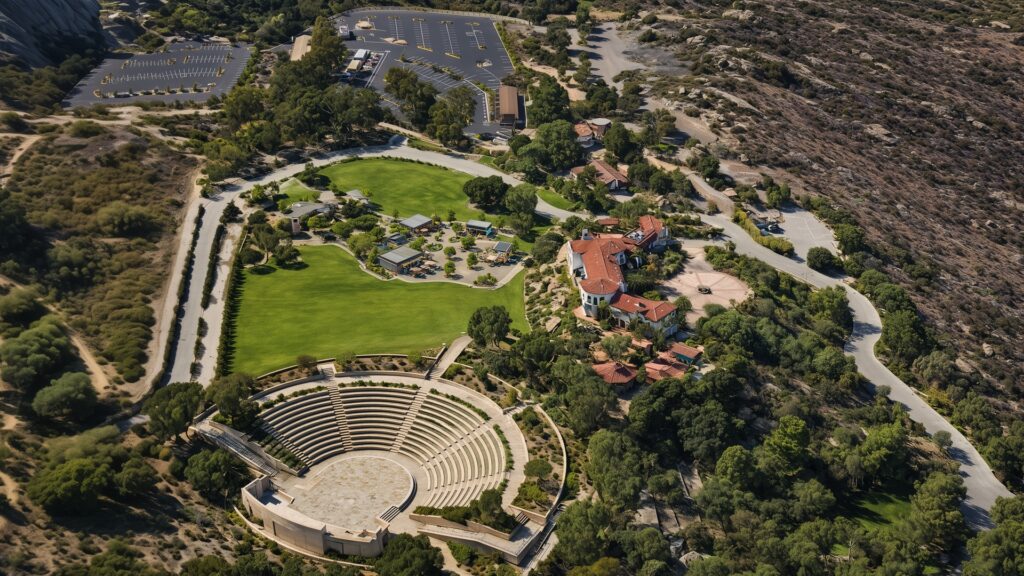
A Simi Valley Council Candidate Has a Bold Idea: Turn Hummingbird Ranch Into the City’s Economic Engine
(CLAIR | Simi Valley, CA) — Anthony Thompson has a question for Simi Valley. And it’s not a small one.
Thompson, a District 1 City Council candidate running in the November 2026 municipal election, is putting a proposal in front of the community that asks the city to look at a 126-acre hillside property most residents have never visited — and imagine what it could become.
The property is Hummingbird Nest Ranch. It sits in the Santa Susana Mountains above the city’s east end. It has a Spanish villa, olive groves, equestrian arenas, guesthouses, and sweeping canyon views. For years it has hosted weddings, film shoots, and corporate events. It operates today as one of the most distinctive private event venues in Southern California.
Thompson’s proposal asks the city to change that — and to change it in a big way.
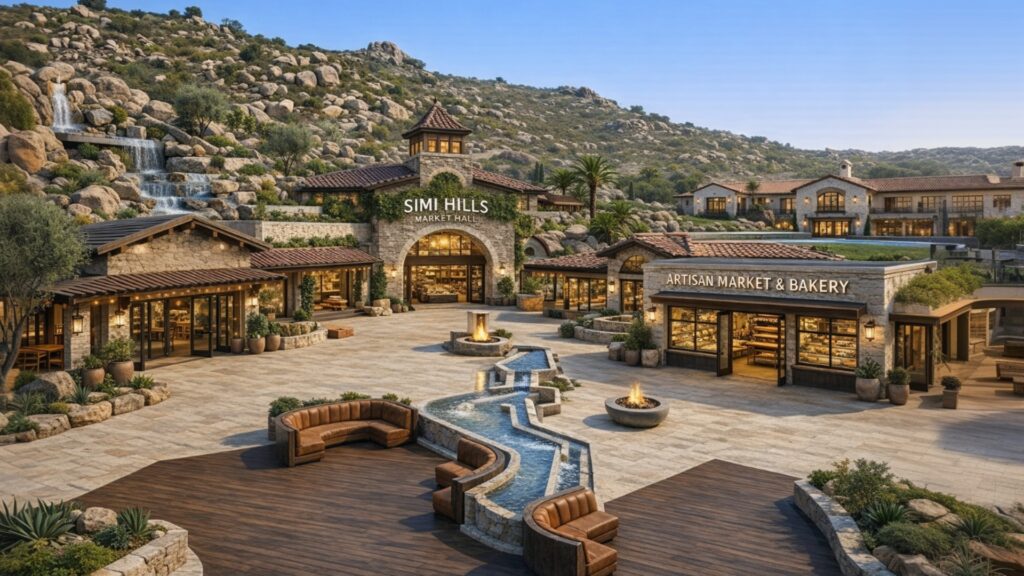
The idea: Simi Valley acquires Hummingbird Ranch and develops it into a full-scale destination district — a four to five-star hotel, a family amphitheater, a modern sports complex, a Topgolf entertainment venue, and dedicated film production space. The goal is to build something the city has never had: a place that draws outside visitors, keeps dollars local, and positions Simi Valley as more than a bedroom community.
It is not a modest idea. And Thompson is not pretending it is.
A Property With History — and Infrastructure Already in Place
Hummingbird Nest Ranch did not start as a wedding venue. It started as one man’s ambition.
In 2000, David Saperstein — founder of Metro Networks, the national traffic-reporting service he took public in 1996 — purchased the 126-acre hillside property through his investment company, Five S Properties Ltd. He commissioned architect Richard Robertson to build a 17,000-square-foot Spanish hacienda. Over the following years, Saperstein added three riding arenas, 16 guesthouses, and a 20,000-square-foot converted horse barn. The property became one of the most impressive private estates in Southern California.
Saperstein’s original vision was a five-star resort. He commissioned developer Dean Kunicki to transform the ranch into a hospitality destination — a 105-room hotel, casitas, restaurants, conference facilities, a surgical center, and a convention center. After years of permitting, the Simi Valley City Council approved the Hummingbird Nest Ranch Specific Plan in May 2014, rezoning the land from residential to commercial resort.
The market never cooperated. The property listed for $75 million in 2007, then relisted for $49.5 million in 2014 — with all city approvals included. It sold in November 2015 for $33 million to Kieu Hoang, CEO of Agoura Hills-based RAAS Nutritionals.
Hoang had his own plans — a wellness center, a possible vineyard. The full resort plan never materialized. Today, the property operates as a high-end private event venue.
The existing commercial resort approvals, however, still stand. The infrastructure — arenas, villa, guesthouses, barn, outdoor event spaces — is already in place. Thompson’s proposal does not suggest starting from scratch. It builds from a foundation that decades of private investment already created.
What Thompson Is Proposing
Thompson frames the proposal around five interconnected pieces, each designed to feed the others.
A four to five-star hotel anchors the plan. Simi Valley’s most prominent tourist draw — the Ronald Reagan Presidential Library, the most-visited presidential library in the nation — brings substantial visitor traffic into the city every year. Those visitors rarely sleep in Simi Valley. The nearest hotel clusters sit in the Conejo Valley. The Agoura Hills and Thousand Oaks area hosts approximately 650,000 annual overnight stays across 18 hotels, generating $80 million in annual revenue. Most of that economic activity happens outside Simi Valley’s borders. A hotel at Hummingbird Ranch changes the math.
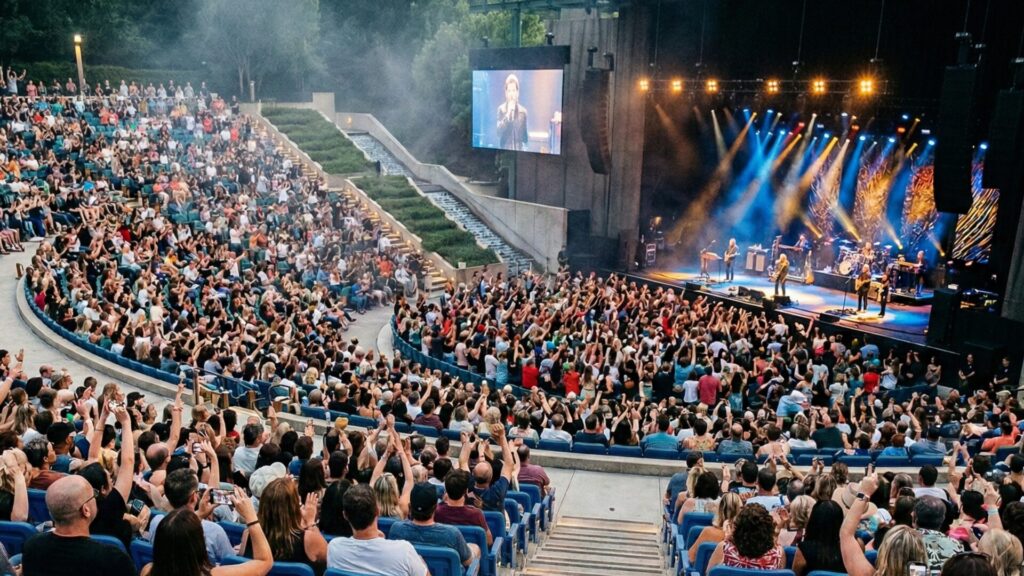
An amphitheater builds civic culture. Concerts, seasonal events, and community programming draw residents together and pull in regional visitors. Cities across California rely on performing arts venues to anchor neighborhood economies and extend visitor stays. An amphitheater on the property — with natural acoustics, canyon backdrops, and existing outdoor event infrastructure — could do both.
A sports complex drives weekend tourism. Youth sports tourism is a multi-billion-dollar national industry. Cities that host regional tournaments attract families who fill hotel rooms, visit restaurants, and shop locally across full weekends. Simi Valley currently captures little of that market. Thompson sees a modern sports facility at Hummingbird Ranch as the city’s entry point.
A Topgolf entertainment venue brings recurring foot traffic and direct revenue. Topgolf venues employ roughly 400 to 475 people per location. A comparable facility in Ontario, California — developed on county-owned land — generates more than $625,000 a year in ground lease revenue for San Bernardino County’s parks system, without requiring the county to operate the venue itself. Topgolf appeals equally to families, casual players, corporate groups, and non-golfers — roughly half of all Topgolf guests have never played traditional golf. It creates evening traffic and a gathering place that serves both leisure and business.
Dedicated film production space reinforces the city’s existing strengths. Simi Valley hosted 426 production days in 2024, generating an estimated $11 million in local economic impact. In the first quarter of 2025 alone, the city logged 168 filming days and $3 million in additional revenue. Hummingbird Ranch itself has served as a filming location for productions including “The Mentalist,” “NCIS,” and the 2015 film “Entourage.” Thompson argues that dedicated production infrastructure extends that revenue stream and builds on a track record the city already holds.
Together, Thompson believes the five pieces form an ecosystem. Hotel guests attend amphitheater events. Sports families visit Topgolf in the evening. Film crews fill hotel rooms and eat at local restaurants. Each element amplifies the others.
The Economic Case Thompson Makes
Thompson’s proposal estimates approximately 500 jobs across hospitality, event production, management, and support services.
That number matters for a city still building its economic base. Simi Valley’s current budget stands at $264 million for fiscal year 2024-25. Property tax revenue tops $44 million — the city’s largest single source. Sales tax generates $23 million. Mayor Dee Dee Cavanaugh put the challenge directly at the 2025 State of the City address: “Shop Simi. Every dollar spent locally helps strengthen the community we all call home.”
A destination district at Hummingbird Ranch creates new categories of local spending. Hotel occupancy tax, event fees, restaurant receipts, and retail spillover generate ongoing revenue that flows directly to the city’s general fund. If structured with public-private partnerships — models common across California — the city limits direct taxpayer exposure while capturing long-term returns.
Some have pointed to Topgolf’s Ontario location as the model. San Bernardino County owns the land. Topgolf built and operates the venue. The county collects more than $625,000 annually without taking on operational risk. Thompson argues Simi Valley can replicate that structure across multiple elements of the Hummingbird Ranch plan.
For context: Topgolf’s parent company, Topgolf Callaway Brands, reported $1.8 billion in Topgolf segment revenue in 2023. A large Topgolf venue generates between $20 million and $28 million in annual revenue, with an estimated payback period of approximately 2.5 years for the operator. That financial profile is why municipalities have found the land-lease model attractive — the revenue is real, and the city does not carry the risk.
Thompson suggests the overall public investment could repay itself within eight to ten years, depending on financing structure and operating agreements.
Thompson at the Candidate Forum
Thompson has been direct about his priorities in public settings. At the February 2026 candidate forum hosted at Simi Valley’s Skateboarding Hall of Fame, he made economic development the center of his campaign pitch.
“The market should dictate prices, not the government,” Thompson said. “My biggest priority would be that economic development — we have to grow our tax base.”
His focus at the forum was on removing bureaucratic friction that slows business growth. He coined the phrase “open for business, closed for bureaucracy” and shared an example of a local business bleeding $10,000 a month while waiting on city permits. Thompson ran for the District 1 council appointment in February 2025 — a seat that ultimately went to Joseph Ayala — and has remained active in civic discussions since. He filed his formal candidacy statement in August 2025 for the November 2026 election.
The Hummingbird Ranch proposal fits the economic development framework Thompson has consistently championed: using existing city assets and public-private structures to grow revenue without raising taxes on residents.
The Questions the Proposal Raises
Thompson does not paper over the complications. The proposal is clear that serious questions need answers before any action moves forward.
The first question is ownership. Cities do not typically own hotels or entertainment venues. The concern is real: should municipal government operate a resort? The answer, in most comparable projects, is no. The model that works is public ownership of land with private operating agreements — the city provides the site, structures a long-term lease, and a private operator carries construction and management risk. The San Bernardino County Topgolf deal is one example.
The second question is cost. Hummingbird Nest Ranch sold for $33 million in November 2015. A decade later, that number is almost certainly higher. Add construction, infrastructure upgrades, and pre-development costs, and the public investment required becomes substantial. Independent feasibility studies — not optimistic projections — must determine whether the revenue model closes.
The third question is traffic. The property sits in a secluded hillside location. Large-scale visitor traffic creates new vehicle loads on roads not designed for destination-level use. Phased development and infrastructure upgrades are necessary. Traffic modeling must guide decision-making before any ground breaks.
The fourth question is character. Simi Valley residents value their community’s relative quiet. Any development must respect architectural standards, landscaping, and programming that keep the property in scale with the surrounding hills. Growth without design discipline erodes trust.
Thompson frames these not as reasons to reject the proposal but as the conditions that would make it work.
Why the Timing Matters
Thompson’s proposal lands at an interesting moment for Simi Valley.
The city’s economy is growing, but unevenly. Industrial development is strong — nearly 768,000 square feet of new industrial space came online in 2024. But retail corridors still show empty storefronts. Restaurant sales tax revenue rose just 2.4 percent in the most recent reporting period.
The Reagan Library draws national and international visitors, but Simi Valley captures little of the economic activity those visitors represent. The city has no hotel capable of hosting the full delegations who attend major events on the library’s campus. Presidential debate years bring media and political figures into the region — and most of them stay somewhere else.
The existing Hummingbird Nest Ranch Specific Plan — the commercial resort zoning approved in 2014 — remains valid. The infrastructure Saperstein built over fifteen years of private investment is still standing. The property’s track record as a filming location is established. Thompson argues that combination is rare and that the window to act on it will not stay open indefinitely.
What Comes Next
Thompson’s Hummingbird Ranch proposal exists, as of now, as a campaign platform concept — a conversation starter rather than a city-approved plan. The property remains privately owned. Any acquisition requires negotiation, legal review, environmental assessment, and community input.
But Thompson believes the conversation itself has value. The 2014 specific plan that rezoned Hummingbird Ranch from residential to commercial resort began as a conversation too. It took years of permitting, planning commission review, and council votes before it became policy. That process created conditions that still stand today.
Voters in District 1 will have a chance to weigh Thompson’s vision when the November 2026 municipal election arrives. For now, he is making the case directly — that Simi Valley has something rare in Hummingbird Ranch, and that a city willing to think carefully about how to use it could build something lasting.
“Simi Valley has always been my home,” Thompson said at the February forum. “We have to grow our tax base — and that means making real decisions about what we have and what we want to become.”
The property offers existing structures, existing approvals, existing infrastructure, and a setting that cannot be manufactured anywhere else. That combination does not come available often. What the city does with the opportunity Thompson is putting on the table is a question residents will help answer in November.