Tiny Homes Are Rising on Easy Street — And They Could Soon Change Simi Valley Neighborhoods
 Sylvie Belmond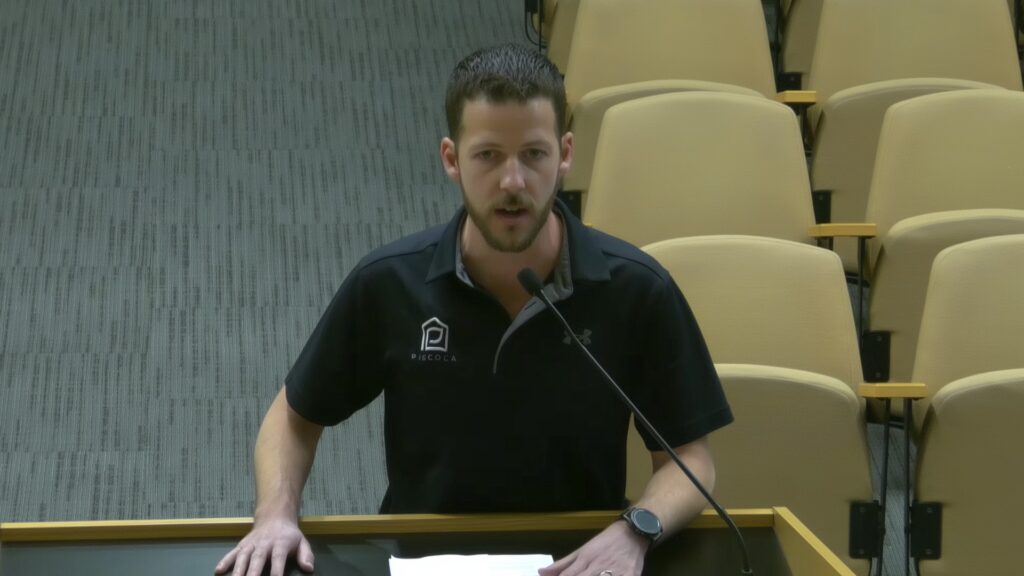
(CLAIR | Simi Valley, CA) — Inside a workshop on Easy Street, small homes are taking shape, complete with kitchens, bathrooms and front doors. Soon, they could begin appearing in Simi Valley neighborhoods.
Speaking to the City Council on Feb. 23, Ben Davis, co-owner of Piccola Tiny Homes, urged officials to consider an ordinance allowing movable tiny homes to be used as dwellings while clearly distinguishing them from RVs.
He said the units could offer seniors, young adults and individuals a practical way to live independently while staying close to family, without the cost or delays of traditional construction.
“I was born and raised in Simi Valley and we’re facing a housing crisis that many families can no longer ignore,” Davis told the council. He pointed to high home prices and said traditional backyard builds can be expensive and slow, especially for families trying to act quickly.
Davis explained why he believes the tiny home option belongs here and why the rules matter.
A former Air Force captain, he brings a methodical, detail-driven approach to how Piccola designs and builds tiny homes.
For retirees who want to downsize but stay close to family, young adults who cannot afford to move out and homeowners looking for practical ways to create space, Davis said movable tiny homes fill a gap.
He emphasized these units are built like houses, not like recreational vehicles.
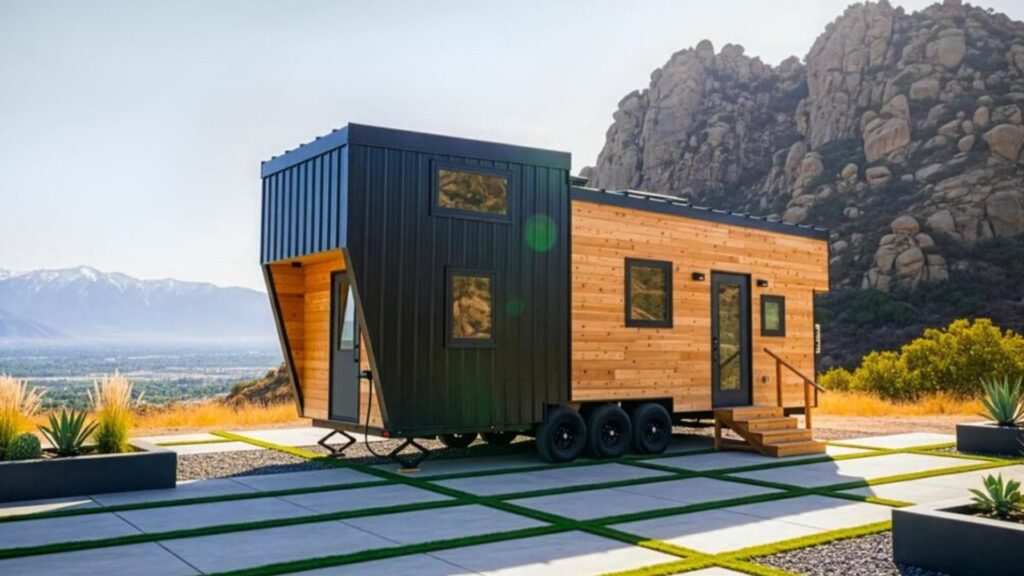
“These homes are built like traditional houses, framed with 2×4 and 2×6 construction, built with standard residential siding, dual-pane windows, full kitchens, full bathrooms and permanent sleeping areas,” he said.
That distinction between a well-built tiny home and an RV is where the policy conversation begins.
“A valid concern which arises is that allowing movable tiny homes as dwellings would allow for any RVs to be used as a dwelling,” he said, adding that he does not want that outcome. He suggested an ordinance could prohibit RV-style features such as slide-outs and while requiring residential-grade insulation, traditional siding, concealed undercarriages and proper utility connections.
He also pointed to 22 other California cities that have already adopted movable tiny home ordinances and said those examples show the model can increase housing options without changing neighborhood character.
“(Tiny homes) increase housing density gently without large apartment complexes or major infrastructure strain,” Davis said. Simi Valley has an opportunity to provide flexible housing solutions without compromising safety or aesthetics.”
Davis invited city officials and residents to visit Piccola’s Easy Street shop to see how the homes are built and said the company is ready to partner with the city on language that protects the community while expanding options for families.
Responding to public comments, council members acknowledged the need to review rules related to movable tiny homes.
Councilmember Elaine Litster told Davis the homes were “absolutely beautiful” and said she believes they belong in Simi Valley.
She noted the state requirement that cities must allow accessory dwelling units and said the city would continue exploring what legal pathway could make movable tiny homes compliant locally.
Mayor Dee Dee Cavanaugh said she would like to tour the tiny homes and joked she might need one herself.
No ordinance has been introduced in Simi Valley, yet. But the Feb. 23 exchange made one thing clear: this is no longer a theoretical housing debate. A local builder is asking his hometown to decide what, exactly, it will allow.