Neighbors Debate Safety After Bear Family Spotted In The Santa Monica Mountains
 Sylvie Belmond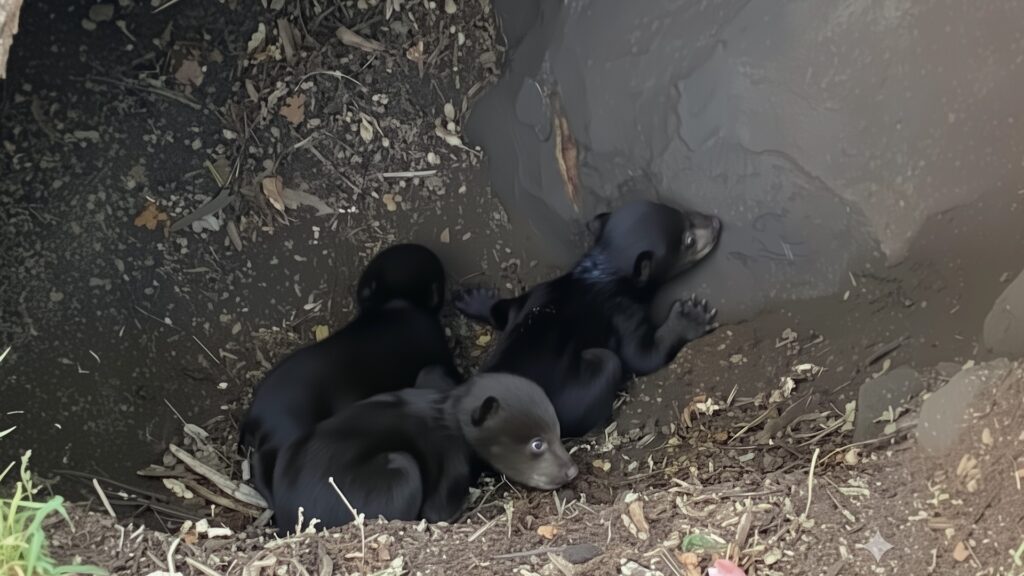
After getting stuck in a Chatsworth tree, this mama bear has returned to the Santa Monica Mountains
(CLAIR | Simi Valley, CA) — Yellow 2291, the GPS-collared black bear known for crossing freeways and even getting stuck in a Chatsworth tree, has returned to the Santa Monica Mountains — this time with three cubs in tow. It’s the first bear family documented in the range in at least 25 years, raising questions about coexistence as Ventura County residents — from Malibu to Simi Valley — adjust to sharing their backyards with California’s largest native mammal.
A black bear mother and her three young have been spotted roaming the Santa Monica Mountains, the first family of bears documented in the range in at least 25 years, according to Los Padres ForestWatch. Their arrival has sparked wonder, debate, and unease among canyon residents now sharing space with California’s largest native mammal. Whether this family thrives, conservationists say, will depend as much on human behavior as on the bears themselves.
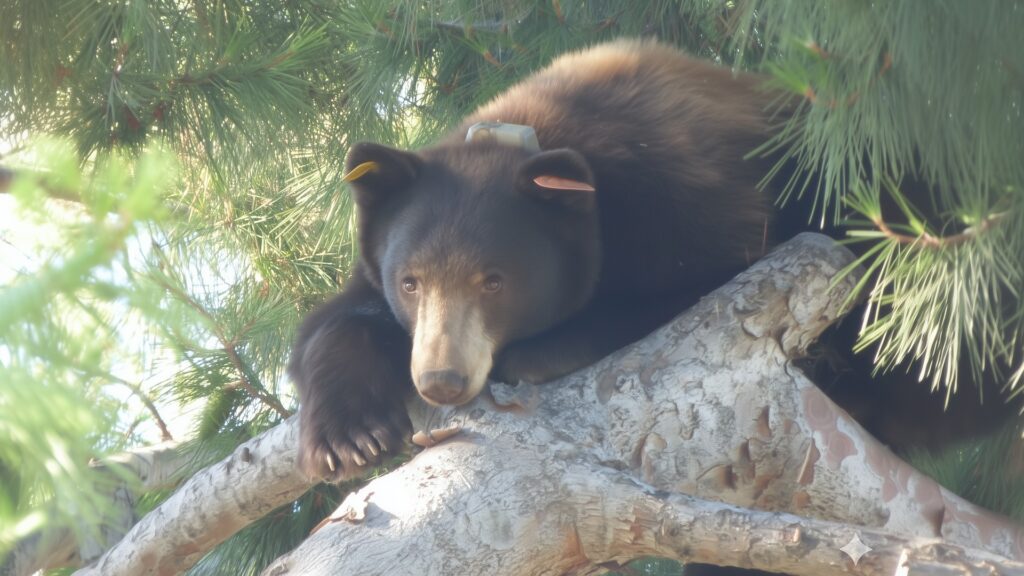
The mother is no stranger to headlines. Last year, she stunned biologists and the public by trekking about 100 miles from the Angeles National Forest to Malibu, crossing four freeways and weaving through Monrovia, Sylmar, Chatsworth — where she famously got stuck in a tree — and Agoura Hills before reaching the coast, ForestWatch reported.
Known to researchers as Yellow 2291, she is estimated to be 4 to 6 years old, weighs roughly 175 pounds, and wears a yellow GPS collar that provides location updates when in satellite range, according to the California Department of Fish and Wildlife. The agency says her repeated return to the Santa Monicas — even after being relocated twice — illustrates “homing,” a phenomenon where bears reclaim their territory despite capture and relocation.
Awe, Questions, and Concerns as Bears Return
Her reappearance with cubs has stirred conversation across Facebook and Nextdoor. A Monte Nido resident shared that their outdoor camera had caught the mother and her three cubs wandering past. From the footage, the young appear to be growing well. Others posted reactions ranging from joy to concern: “Mommy and her cubs, so amazing,” one person wrote. Another warned, “Bad idea to put their location on social media.” Some worried about whether there is enough food to sustain the family, while one commenter voiced a practical fear: “I just hope the weekend racers on Piuma and Cold Canyon don’t hit them.”
Wildlife experts emphasize that black bears generally avoid people, but encounters do happen. ForestWatch advises anyone who crosses paths with a bear to stay calm, keep quiet, and back away slowly. Running, yelling, or approaching — especially a mother with cubs — can trigger defensive behavior.
For those who live near open spaces, there are practical steps to reduce conflicts: secure trash in bear-proof containers, keep pet food — and pets — indoors overnight, promptly harvest fruit and remove fallen fruit, install electric fencing around chicken coops, and never feed bears. Drivers in canyon areas are urged to use extra caution.
“Bears are incredibly intelligent, with a sense of smell a hundred times better than ours,” said Bryant Baker, conservation director with Los Padres ForestWatch. “It’s up to us to make sure they stay wild.”
For some, the sight of a bear family in the Santa Monicas is a symbol of resilience, a wild return in a region known for freeways and urban sprawl. For others, it raises hard questions about safety, resources, and how humans and wildlife can coexist.
And while the sight is historic for the Santa Monicas, it’s not entirely unusual for Ventura County. News reports show that black bears have occasionally wandered into Simi Valley — sometimes caught on cameras rummaging through trash — with sightings stretching back years. Residents in Simi, too, have learned that bears are once again part of the landscape, thanks to the city’s proximity to Los Padres National Forest.
For now, Yellow 2291 and her three cubs are carving out their place in the mountains. Their future, advocates say, depends on whether people give them the chance to stay wild.