
Could More Dates, More Marriages, and More Babies Save the World From Extinction?
 CLAIR Editorial Staff
The Population Collapse Happening Right Now: And Should Simi Valley Be Talking About It?
(CLAIR | Simi Valley, CA) — More and more young women are saying they don’t want children—and that choice could decide the future of humanity. In 2024, the Pew Research Center reported that 64% of women under 50 who say they will never have children are making that decision simply because they don’t want to. Not because they can’t afford it. Not because they lack partners or opportunity. Simply because they choose not to.
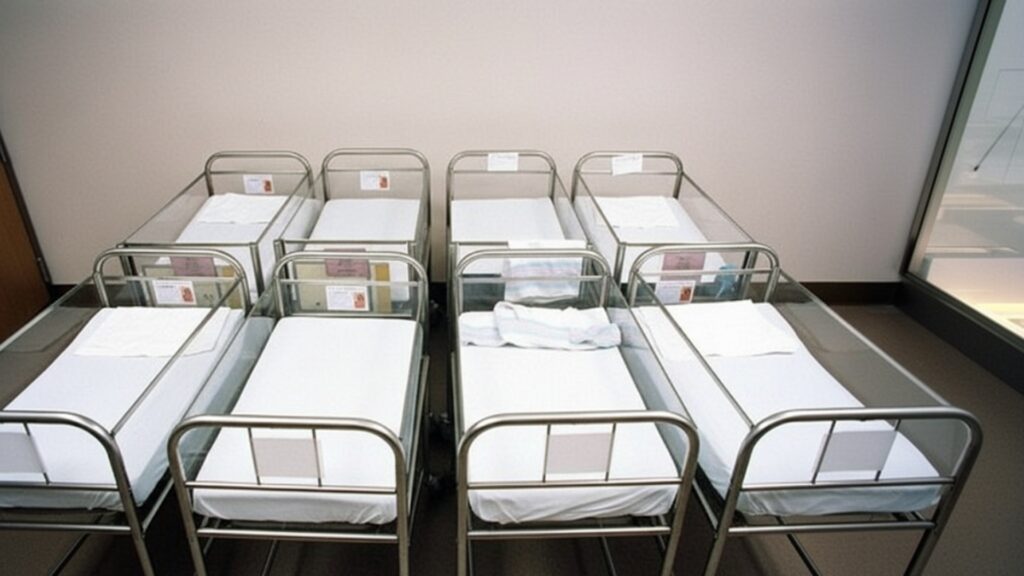
This isn’t just about fewer babies being born. Some believe, it could mean the end of humanity. Demographers warn that humans stand a very real risk of extinction—and the numbers are rather shocking to see. Unlike other earth-ending predictions—framed around computer models, hypotheticals and opinions—population collapse is based on widely available demographic data that can be counted, measured, and reviewed by pretty much anyone.
To understand how quickly this plays out, demographers often point to the typical childbearing years, usually defined as ages 15 to 44. With fertility rates well below replacement levels, it is possible to project the size of future generations 5, 10, or even 50 years out. Each generation is smaller than the one before, and the math compounds over time.
The fertility rate required to sustain a population is 2.1 children per woman. Yet the United States is at 1.6. Europe averages 1.5. Japan sits at 1.3. And South Korea has collapsed to 0.7, the lowest rate ever recorded in human history. According to The Lancet’s Global Burden of Disease Study, by 2100, 97% of countries will be below replacement fertility. The International Monetary Fund projects that 38 countries will see population decline within the next 25 years, including massive losses in China (−156 million), Japan (−18 million), Italy (−7.3 million), and South Korea (−6.5 million).
Some observers, including entrepreneur Elon Musk, have argued that declining birth rates pose a greater threat to civilization than climate change. Musk has described low fertility as the “biggest danger to the future of human civilization,” a warning echoed by many demographers studying these trends.
According to experts, if these trends continue, the consequences are predictable. Schools will close, as already seen in Japan where thousands have shut down. Cities will hollow out, as projected in a Scientific American analysis. Their forecasts indicate that nearly half of U.S. cities could be depopulating by 2100. Economies will contract, a trend identified by the IMF, which warns of shrinking labor forces and reduced growth in dozens of countries within the next generation. And entire nations could eventually disappear, as researchers David A. Swanson and Jeff Tayman have shown in long-term population modeling.
Well-known geo-political expert and economist, Peter Zeihan, predicts Europe and China will not survive the next decade witt their current governments and borders. His models predict that a rapidly aging China will fracture into several smaller countries.
The First Sign: Empty Classrooms
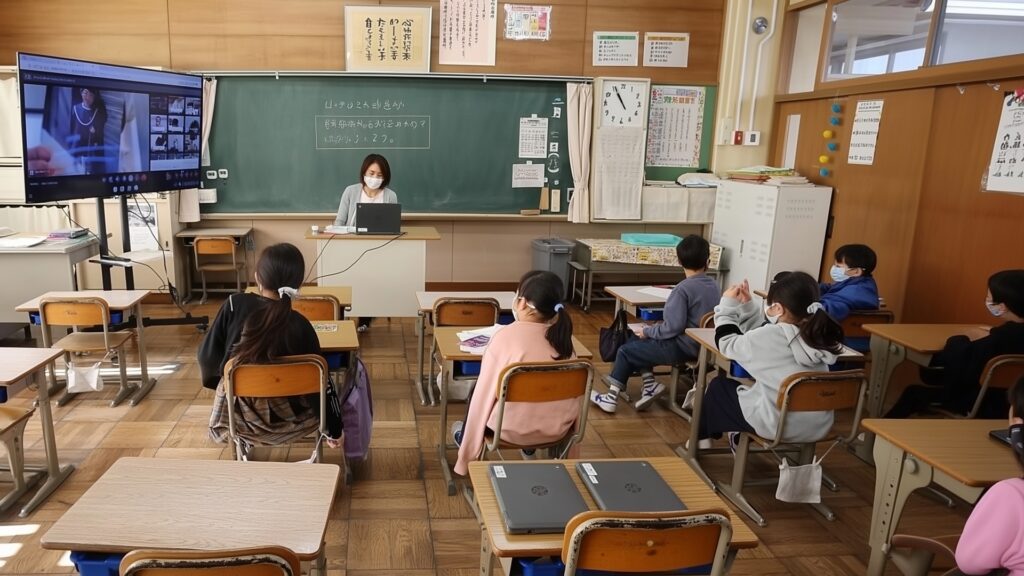
Public school enrollment across the United States has declined significantly. According to the National Center for Education Statistics, K–12 public school enrollment dropped by 1.3 million students between 2019 and 2022. In 2024 alone, public schools lost another 102,000 students, with 39 states showing continued declines. Projections suggest a further drop of 5.3% by 2032, which would mean millions fewer children in classrooms nationwide.
Homeschooling and private education have grown, but they do not fully explain the decline. In the 2022–23 school year, about 6% of all school-aged children were homeschooled, compared to just 2.8% in 2019. Private school enrollment also rose, yet even combined, these shifts have not offset the overall loss in public school populations.
The same trend is visible locally. In Ventura County, public school enrollment has fallen by 6.5% since 2018, dipping below 125,000 in 2024–25. In Simi Valley, the district once served 22,000 students; today it serves closer to 15,500.
The decline is not only visible in schools but also in hospitals. Adventist Health Simi Valley announced last May that it will close its Labor/Delivery and NICU services. The reason: births at the hospital have declined by 25%, making it impossible to sustain these services. Ventura County’s birth rate reflects this larger trend, falling from over 19 births per 1,000 residents in 1990 to just 10.5 in 2021.
What happens when classrooms grow emptier and maternity wards close? What does it mean for teachers, doctors, and entire communities when fewer children are born each year?
Japan provides one possible answer. There, thousands of schools have already closed due to a shortage of students. In South Korea, officials warn that entire universities are at risk of collapse.
Shrinking Cities
According to a Scientific American analysis, by 2100 nearly half of America’s 30,000 cities could be depopulating, losing up to 23% of their people.
This pattern has already appeared in certain parts of the United States. Former industrial centers like Detroit and Youngstown, Ohio, saw populations shrink dramatically in recent decades, leaving behind vacant neighborhoods, shuttered schools, and weakened tax bases. In Japan, entire rural towns have vanished as populations aged and younger generations failed to replace them.
What happens when this becomes the norm rather than the exception? Who maintains hospitals, roads, and utilities when there are not enough residents to support them?
A World Growing Old
Population decline also means population aging. By 2050, one in four people in Europe and East Asia will be over 65. The OECD projects that the old-age dependency ratio—the number of seniors compared to working-age adults—will nearly double by 2060, from 30 seniors for every 100 workers to almost 60.
Economists warn this could strain pension systems, overwhelm healthcare services, and reduce consumer demand as societies age. What happens when there are fewer workers to support retirees, and fewer young families to sustain economic growth?
The Risk of Extinction
Some researchers suggest the long-term implications could go beyond economic strain. David A. Swanson and Jeff Tayman, in a demographic study, modeled scenarios of sustained low fertility. Their findings suggest that if global fertility does not recover, humanity could face extinction by the year 2359. In a hypothetical scenario where births stopped entirely, extinction would occur by 2134.
At what point does population decline become irreversible? If every generation is smaller than the one before, how many generations remain before recovery is no longer possible?
Efforts to Reverse the Trend
Governments worldwide have experimented with policies to encourage higher fertility:
- France provides generous child allowances, keeping its fertility rate around 1.8—among the highest in Europe.
- Sweden and Denmark offer 16 months of parental leave and subsidized childcare, keeping fertility rates above the European average.
- Hungary exempts mothers of four or more children from income tax for life.
- Singapore offers “baby bonuses” worth up to $10,000 per child.
- South Korea, despite spending billions on subsidies and housing for families, still has the world’s lowest fertility rate at 0.7.
- Russia once held a “Day of Conception,” giving couples time off work to try for babies, even offering prizes for births nine months later.
Despite these efforts, fertility rates remain below replacement in nearly all advanced economies. If direct financial incentives are not enough, what cultural or social changes would make parenthood more appealing?
Questions for the Future
What happens to cities when every new generation is smaller than the last?
What happens to schools when classrooms empty faster than they can be filled?
What happens to nations when their people grow old and no one comes after?
What happens to humanity if reproductive-age adults continue choosing not to replace themselves?
The numbers are not speculative. They are already visible in census data, in closed schools, in hollowing towns, and in aging societies. If these trends continue, how long before humanity must confront a question once reserved for science fiction: what happens when there are no people left?