 Daniel Jordan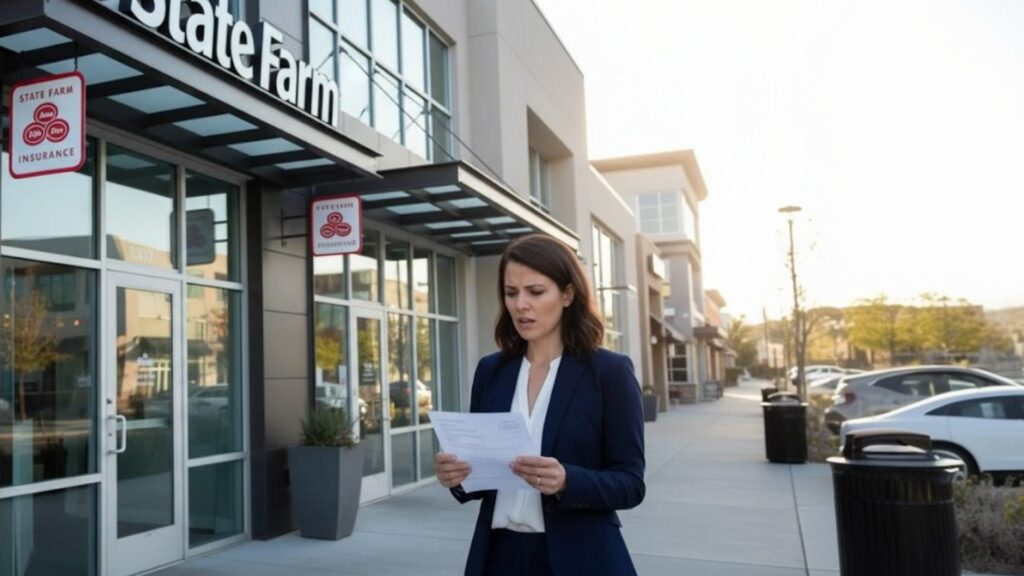
When Big Insurance Walks Away, Communities May Need to Protect Themselves
(CLAIR | Simi Valley, CA ) — For generations, buying a home in Simi Valley meant peace of mind. You paid your mortgage, kept up your insurance, and never worried about whether you’d be covered if something went wrong. That certainty is disappearing.
Across California, thousands of homeowners are receiving letters from their insurance companies with a single devastating line:
“We will not renew your policy due to wildfire exposure.”
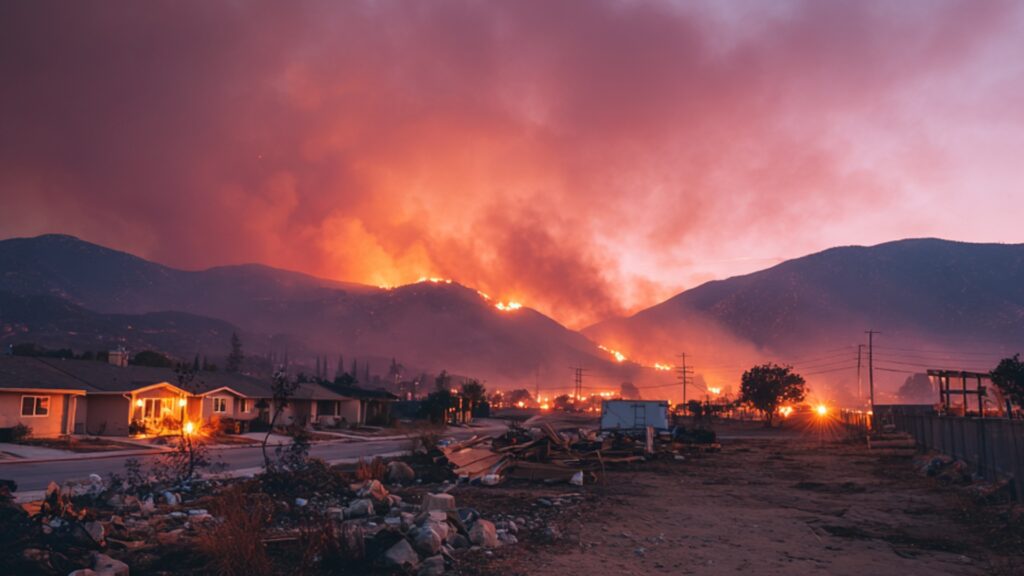
It’s not because they filed a claim. It’s not because their home is on a ridgeline or next to wild brush. It’s because the insurance industry is retreating from much of California — including places like Ventura County — after years of billion-dollar wildfire losses.
The Vanishing Safety Net
This pullback has left even responsible homeowners stranded. In February 2024, State Farm announced it would not renew 72,000 home and rental policies in California, citing “rapidly growing catastrophe exposure, soaring reinsurance costs, and an unsustainable regulatory climate.”
They aren’t alone. Allstate, Farmers, and USAA have all reduced their presence in the state, especially in areas near open space or canyons.
For many residents, the only fallback is the California FAIR Plan, the state-mandated “insurer of last resort.” But FAIR Plan policies are limited — they usually cover only fire and smoke damage — and the premiums can be two to three times higher than private policies.
The FAIR Plan was never meant to handle this kind of demand. Between 2018 and 2024, enrollment in the program nearly doubled, forcing the plan to seek emergency reinsurance just to stay solvent.
“We’re seeing families pay for less protection at the exact moment they need more,” Insurance Commissioner Ricardo Lara told CalMatters in an April 2025 interview. “This is not sustainable.”
Why Simi Valley Is Getting Dragged In
Simi Valley is not Malibu, and it’s not Paradise — but to an insurance company’s algorithm, that may not matter.
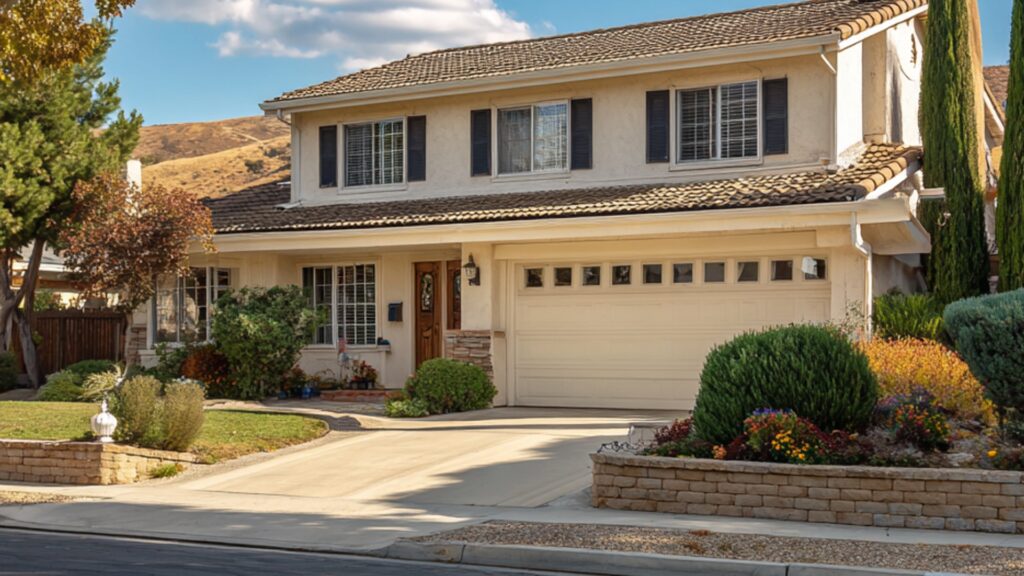
The city sits in a basin bordered by hills and canyons. Many neighborhoods, from Corriganville to Big Sky, are separated from open brush by only a few hundred feet. Even if a home has never experienced fire, its “wildfire risk score” may be elevated simply due to topography and wind direction.
Add to that the region’s rising construction costs, which make post-fire rebuilding more expensive, and insurers start to see every house as a potential million-dollar payout.
The result: higher premiums, non-renewals, and fewer options.
It’s a problem that’s creeping south from high-risk zones like the Santa Monica Mountains into areas that have rarely seen wildfire damage.
A New Kind of Insurance Idea
As state regulators and big insurers spar over rate approvals, some communities are exploring a very different path — one that feels almost old-fashioned: neighbors insuring neighbors.
The concept, called peer-pooling or community-based insurance, flips the usual model upside down.
Instead of paying a large corporation that funnels money to distant investors, homeowners form a local cooperative — a shared pool of funds dedicated to covering their own homes.
Here’s how it could work:
- Every homeowner pays into a community insurance fund.
- The fund pays out for small or moderate losses — say, smoke damage or partial roof replacement.
- For catastrophic events, like a large wildfire, the group purchases reinsurance from a larger firm to backstop major payouts.
- At year’s end, if there’s money left over, it’s refunded, saved as reserve, or invested in fire prevention projects such as brush clearing or ember-proof retrofits.
It’s not theoretical. Similar models are already being tested elsewhere.
Real-World Inspiration
In Truckee, California, the Tahoe Donner Association — a large homeowners group near Lake Tahoe — recently partnered with The Nature Conservancy and global broker Willis Towers Watson to create a wildfire-resilience insurance program.
Because the community has maintained thousands of acres of treated forest and fuel breaks, its insurance premium is 39% lower than it would have been without that work, and the deductible is 89% lower, according to project documents from the UC Berkeley Center for Law, Energy & the Environment.
It’s a simple idea with big implications: reward communities that reduce their own risk.
At the same time, California’s new public wildfire risk model, created under Senate Bill 429, aims to make insurance pricing more transparent by showing how factors like vegetation, slope, and wind affect premiums. That kind of data could make peer-pooling much easier to design at the neighborhood level.
How It Might Work Here
Imagine a pilot program in Simi Valley:
- 200 homes in a high-risk area, such as the city’s Indian Hills or Big Sky areas, agree to join a local insurance cooperative.
- Each homeowner pays a modest monthly contribution — perhaps $100 to $150 — into a shared pool.
- The fund pays small claims and carries a “stop-loss” reinsurance contract to cover anything above a preset limit, like $5 million.
- Every home must meet baseline fire-safety standards: defensible space, Class-A roof, ember-resistant vents.
- The pool is managed transparently, with an online dashboard showing contributions, claims, and reserves.
- Any surplus can be refunded or used for fire-mitigation projects that benefit everyone.
It’s similar to how some agricultural cooperatives or flood-risk pools work — and it’s already being studied by actuarial researchers. The Society of Actuaries recently published a model showing that peer-pooling combined with catastrophe reinsurance can meaningfully lower costs for medium-sized communities while maintaining solvency.
Challenges Are Real — but So Is the Potential
Of course, there are caveats.
Wildfires can affect many homes at once, so a single event could overwhelm a small fund. That’s why reinsurance or state-supported catastrophe bonds would be critical.
California’s insurance laws also make it difficult for unlicensed groups to sell or manage insurance. But community cooperatives can be structured legally as reciprocal exchanges or captive insurers, provided they follow solvency and reporting standards.
And there’s the issue of trust. For any local insurance pool to work, transparency has to be absolute. Every member must see how money is collected and spent.
But despite those hurdles, the logic is strong. When insurance becomes unaffordable or unavailable, communities can either wait for help — or become their own safety net.
Why Simi Valley Could Lead
Simi Valley is unusually well-positioned for a pilot like this. It’s a midsize city with organized HOAs, strong civic groups, and a fire department that already partners with residents on brush-clearing and defensible-space programs.
A local insurance pool could start small, prove the concept, and expand — potentially attracting larger reinsurers eager to test new risk-management models.
Over time, Simi Valley could become a proof-of-concept for the entire state, showing that resilience and cooperation can fill the gap left by corporate retreat.
“Insurance was built on the idea of shared risk,” says an analysis from the Harvard Joint Center for Housing Studies. “If private markets can’t manage that balance anymore, communities may need to reclaim it.”
A Turning Point
Home insurance used to be boring. You paid it, forgot it, and trusted that it would be there when you needed it.
Now, it’s becoming a fragile system that can vanish with a single letter.
But maybe that letter — the one so many Simi homeowners have opened this year — could spark something new: a realization that safety doesn’t always have to come from somewhere else.
If we can insure one another — fairly, transparently, and responsibly — Simi Valley could show California what community protection really looks like.
Because when the fires come, the question isn’t whether an insurance company will be there.
It’s whether we will be there for each other.








Would definitely like to learn more & get involved. Is there any group/organization heading this up?