
Prices Are Rising — and Simi Valley Is Split on Whether Tariffs Help or Hurt Consumers
 Sylvie Belmond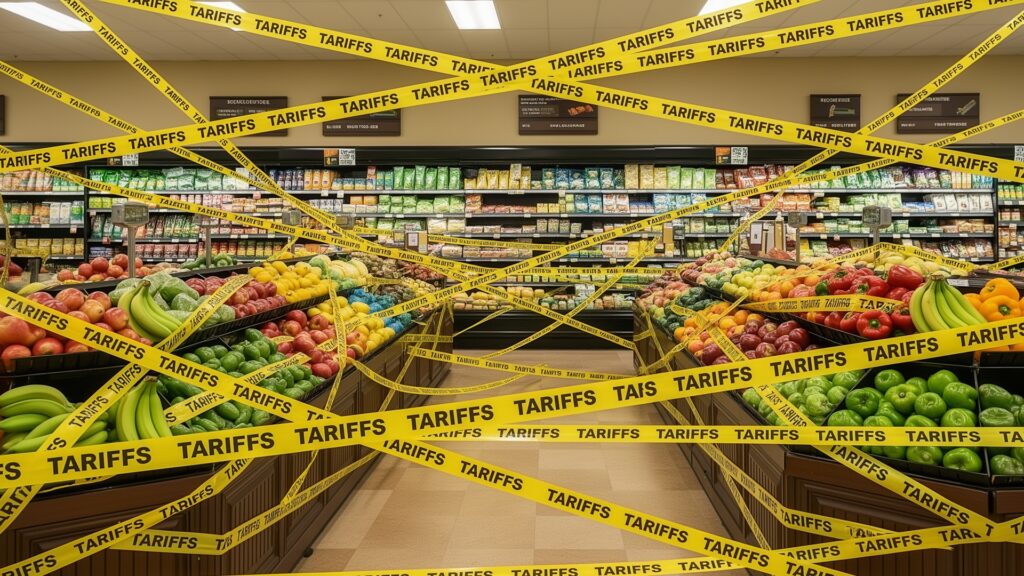
Supporters endorse the president’s efforts to protect U.S. industry through tariffs. Critics say the cost is hitting households and small businesses too hard.
(CLAIR | Simi Valley, CA) — That morning cup of coffee? It’s getting more expensive — and not just because of inflation. Beans from South America, lids from Asia, and the steel parts in espresso machines are all caught in an ongoing trade policy shift. The reason: a wave of new U.S. tariffs that have been imposed and adjusted several times this year.
These policy moves aren’t abstract. They’re showing up in checkout totals across Simi Valley — from grocery aisles to repair shop counters to seasonal displays.
How the Cost Reaches You
Tariffs are taxes on imported goods, paid by U.S. importers when products cross the border. But the cost rarely stops there. According to the Council on Foreign Relations, those added expenses move through the supply chain — from distributors to retailers — before landing on consumers in the form of higher prices. The Tax Foundation explains that companies often pass tariff costs along to shoppers, while businesses that rely on imported materials may see tighter margins.
A 2025 analysis by Goldman Sachs estimates that American consumers are currently absorbing about 55% of the cost of tariffs, with U.S. businesses covering roughly 22% and foreign exporters just 18%.
Economists at the Economic Policy Institute (EPI) say that despite political claims to the contrary, tariffs don’t usually hurt foreign sellers — unless American buyers start walking away. In many cases, especially for goods with few alternatives, U.S. demand stays steady, meaning exporters don’t lower their prices and aren’t directly affected. Unless tariffs cause a real shift in purchasing habits, EPI concludes, the result is “a pure cost to U.S. consumers without any countervailing benefit.”
In practical terms, that means everyday products like coffee, groceries, electronics, and car parts — anything made or assembled overseas — now likely includes an extra tariff-driven cost.
Why Supporters Say Tariffs Are Worth It
While critics see tariffs as an added cost to consumers, supporters argue they serve a bigger purpose. The Trump administration calls tariffs “a powerful source of leverage for protecting the national interest,” according to a February 2025 White House fact sheet. The goal, officials say, is to reduce dependence on foreign suppliers, encourage domestic production and use tariffs as bargaining power in trade negotiations.
Supporters also point to lessons from the pandemic, when supply-chain breakdowns exposed the risks of relying on imports for key goods. Economists at the Economic Policy Institute note that tariffs can help strengthen domestic manufacturing when paired with broader industrial policy — though they acknowledge that short-term costs to consumers are inevitable.
To those backing the policy, higher prices now are a trade-off for greater economic stability later.
Local Ripple
In Simi Valley, the impact is widespread. Small and large businesses that rely on imported goods are seeing higher invoices. From grocery stores and hardware chains to local boutiques, cafés, repair shops and nail salons, rising costs — both on the products they need to operate and the items they sell — are forcing tough decisions. Some absorb the increases, others raise prices or scale back services. Economists say these trade-offs are common when tariffs extend across multiple sectors and supply chains.
Even routine errands reflect rising costs. Imported cheeses, wines, and seasonal decorations are more expensive this fall, as many are sourced from countries now facing steep U.S. tariffs. Electronics, household appliances and auto parts — like brake pads and batteries — are also affected, since many contain components made abroad.
These ripple effects land hardest on households already under strain. Rent, fuel and insurance premiums are up. In Ventura County, 39% of households spend more than 30% of their income on housing. Among extremely low-income households — including seniors on Social Security and single-earner families — more than 70% spend over half of their income on housing, according to the California Housing Partnership. For those families, even modest price hikes can hit hard.
Divided Perspectives
Some Simi Valley residents say higher prices are a necessary trade-off to protect U.S. industry. They support the administration’s efforts to reduce reliance on foreign supply chains and bring more manufacturing and production back home.
One resident wrote on social media:
“Why doesn’t the left complain about how bad WE were getting tariffed all this time? Reciprocal tariffs will bring in a TON of revenue.”
Others chimed in:
“Businesses are coming here! Some are returning from doing business elsewhere.”
“This is common sense stuff.”
“Our representatives need to make all trade fair. If any country places tariffs on our nation we should return the favor.”
But critics argue that the burden falls too heavily on consumers and small businesses. One commenter warned that tariffs are passed on to the consumer and used to fund tax cuts for the wealthy:
“Basic economics 101.”
According to the Economic Policy Institute, this “price pass-through” is a core function of how tariffs are designed — but the result is higher costs for everyone.
Trump Defends Tariffs
During a press event Monday, President Donald Trump was asked what would happen if China — which controls over 90% of the world’s critical minerals — refuses to “play fair.”
“We have a tremendous power, and that’s the power of tariff,” Trump said.
“I think China will come to the table and make a very fair deal. Because if they don’t, they’re going to be paying us 157% in tariffs. Right now they’re paying 55 to 57%.”
He said the U.S. has made what he considers “very fair” deals with partners like Japan and the European Union. If China doesn’t agree to new terms, he added, the U.S. will impose an additional 100% in tariffs starting November 1.
Trump argued that tariffs signal the U.S. is willing to walk away from unfair trade. His message: America should succeed in trade just as its partners do — but not at a disadvantage.
He did not address the domestic cost of tariffs for American consumers and businesses.
Global Reactions
The ripple effects are international. A September 2025 report from SWI swissinfo.ch found that U.S. tariffs “are rattling countries worldwide and prompting them to redirect trade flows at record speed.” Switzerland, hit with a 39% tariff, has begun fast-tracking new trade deals to reduce reliance on U.S. markets. It’s a sign that the global trade landscape is shifting in response to U.S. policy.
Everyday Reality
Tariffs are a regular topic in national headlines — but in Simi Valley, the impact isn’t just political. It’s personal. It shows up in everyday purchases — at the grocery store, the repair shop and the neighborhood coffee shop.
Economists say tariffs may help shift sourcing toward U.S. suppliers, but in the short term, they raise costs for businesses and consumers alike. Whether the approach ultimately strengthens the economy or simply makes life more expensive will depend on how long the tariffs last and how businesses and households adapt.
For now, one thing is clear: this debate isn’t just happening in Washington. It’s happening at the register, the invoice and the dinner table.