 CLAIR Editorial Staff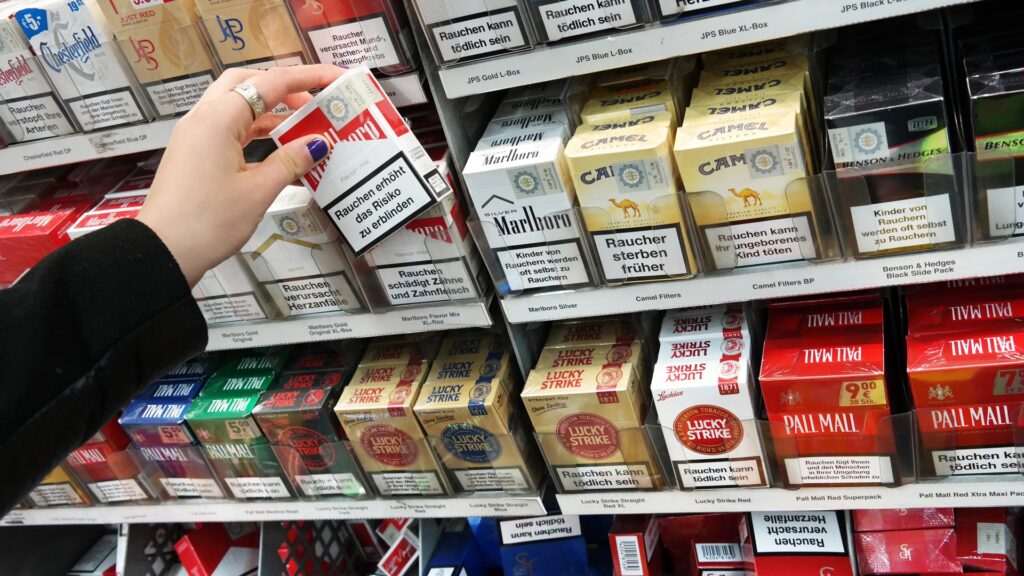
Who Really Wins When You Pay $12 for a Pack of Cigarettes?
(CLAIR | Simi Valley, CA) — The state says it wants you to quit smoking. Then it turns around and hopes you don’t — at least not too quickly. Every time a smoker quits, California loses money.
That’s because cigarette taxes, which are supposed to discourage smoking, also fund some of the state’s biggest health and education programs. The more people quit, the less the state collects.
To understand the scale, imagine this: every pack sold in California brings in $2.87 in state excise tax. Add sales tax and local fees, and smokers hand the state billions each year — about $1.7 billion, according to recent data. That’s roughly the same as California’s entire state parks budget.
It adds up fast. A smoker who buys one pack a day pays nearly $1,000 a year in tobacco taxes alone. For some that’s almost a month’s rent — or a car payment — burned away one puff at a time.
At the gas station on Tapo Canyon, a pack of Marlboros sells for about twelve dollars. Most of that isn’t profit for the store; it’s tax. “People get mad,” said the clerk. “But we make maybe fifty cents. The rest goes to Sacramento.”
For non-smokers, that price might sound insane. But for those who still smoke, it’s routine — and it’s the result of years of deliberate policy.

California’s approach is simple: make smoking expensive enough that people stop. In 2016, voters approved Proposition 56, adding another two dollars per pack to fund Medi-Cal, First 5 California, and tobacco prevention programs.
And at first, it seemed to work. Smoking rates dropped to record lows. Health advocates called it a victory.
But victories have consequences.
As fewer people smoked, the stream of tax money began to dry up. By 2021, tobacco tax revenue had already started to fall. First 5 California, which funds early childhood development programs, saw its revenue drop by more than 40 percent since Proposition 56 took effect. Other health programs tied to cigarette sales are warning of shortfalls, too.
“They say it’s about health,” said Steve Lewis, a construction worker from Northridge. “Then when people quit, they say they don’t have enough for healthcare. That sounds backward.”
It does sound backward. Maybe even manipulative.
Because if the goal is to make smoking disappear, why would the state build part of its health budget on cigarette sales? The system only works as long as people keep buying the very thing it claims to eliminate.
It’s a moral contradiction dressed up as public policy — and one that few seem willing to talk about.
Each smoker who still buys a twelve-dollar pack isn’t just paying for nicotine; they’re paying for California’s conscience. They’re funding programs that depend on their addiction, programs that might collapse if they ever truly quit.
“It’s a loop that feeds on itself,” said another clerk, stocking shelves at a Simi Valley mini-mart. “The higher the tax, the fewer people smoke. The fewer people smoke, the more they raise the tax. Somebody’s always paying, but it’s never the state.”
And that’s the part that doesn’t feel right. The state keeps the moral high ground while keeping the money. The message is clear — stop smoking, but don’t stop too soon.
California’s tobacco policy looks like a public-health success. But when you follow the money, it starts to look like dependence.
So maybe the real question isn’t whether these taxes work. It’s whether the state ever meant for them to end.