
1983: The Sixteen-Year-Old Runaway Living In Simi Valley’s Frontier Park
 Daniel Jordan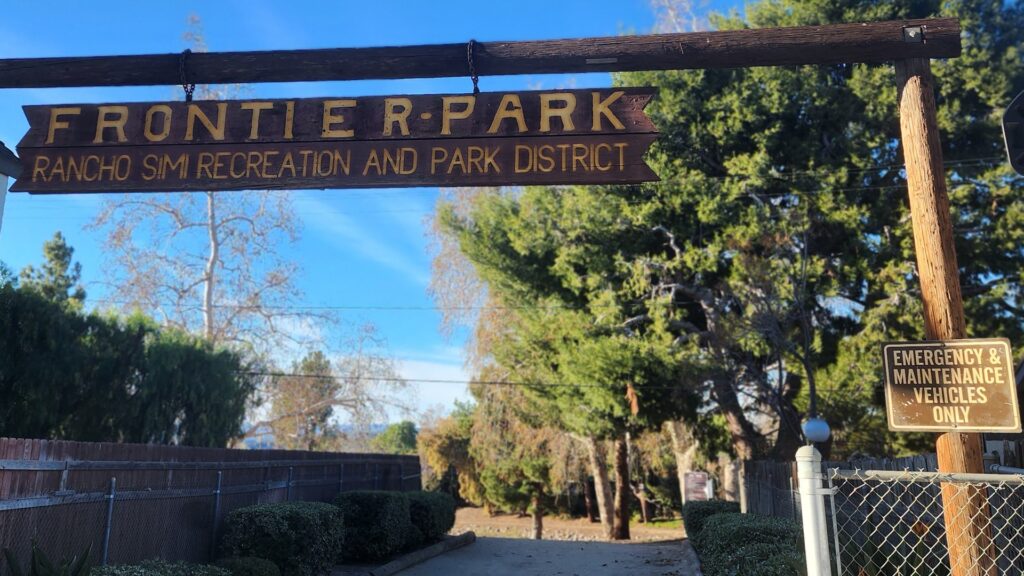
Four decades later, the story of Jimmy Cienfuegos
(CLAIR | Simi Valley, CA) — Most people remember Simi Valley in the 1980s as a quiet suburb — tidy cul-de-sacs, new tract homes, and the steady sound of construction in the hills. But tucked behind those new neighborhoods, in a small community park off Elizondo Street, a sixteen-year-old boy named Jimmy Cienfuegos was living in a handmade wooden fort.
That’s not an urban legend. It’s a fact, recorded in the December 21, 1983 issue of The Simi Valley Enterprise. Reporter Karen West told the story of a runaway who had been sleeping in Frontier Park for nearly six months — surviving on stolen food, drifting between arrests, and hoping to stay clean long enough to finish school.
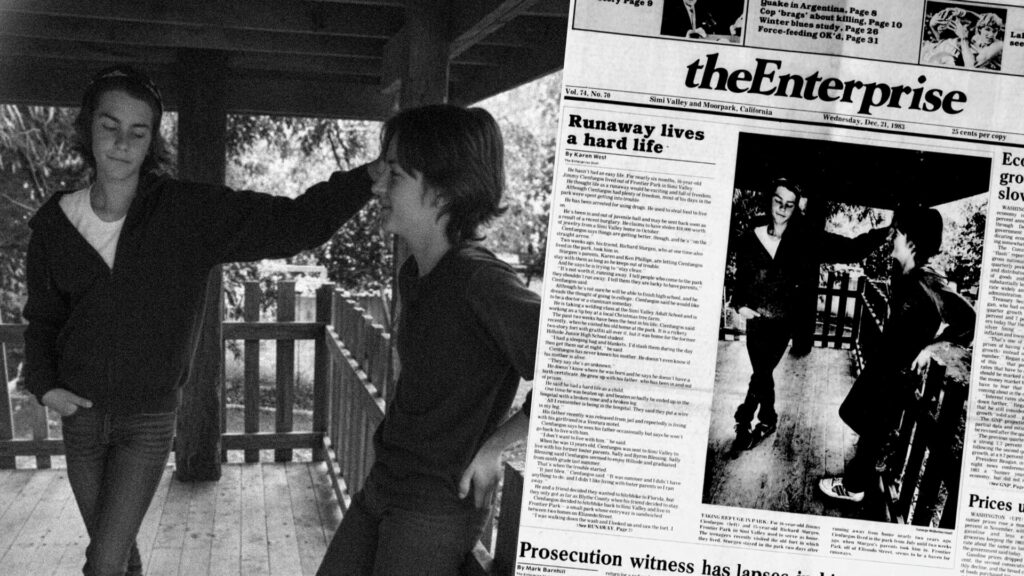
The fort — described in the newspaper as a “rickety two-story structure with graffiti all over it” — stood hidden in the trees near the wash. It was home, for a time, to Jimmy and several other teenagers who had nowhere else to go.
“It’s not worth it, running away,” he told the reporter. “I tell people they’re lucky to have parents.”
The Runaway in the Park
Cienfuegos’s life, as he described it, was already difficult. He never knew his mother. His father had been in and out of prison. He said he didn’t even have a birth certificate.
He attended Hillside Junior High, graduated from ninth grade, and briefly enrolled at Royal High School — but dropped out after two weeks. He took a welding class at the adult school and picked up work at a Christmas tree lot. He said he wanted to be “a doctor or a stuntman someday.”
In the Enterprise story, he admitted stealing food to live on, and later, jewelry from a Simi Valley home. He spent time in juvenile hall and expected to go back. But at the time of the interview, he said things were finally improving. His friend Richard Sturgen, 15, and Richard’s parents — Karen and Ken Phillips — had taken him in.

“I didn’t know he was there until one Sunday morning I looked out the window and saw him,” Karen Phillips told the reporter. “He’d been sleeping in our backyard because it got too rowdy in the park.”
That one act of kindness — a family opening their door to a boy with nowhere to go — was what pulled Jimmy out of Frontier Park.
A City Still Learning What to Do
In 1983, Ventura County’s youth services system was limited. Officials quoted in the story described a familiar problem: they couldn’t hold a runaway in foster care or juvenile hall without a formal criminal charge, and they couldn’t make a teenager stay in a home against their will.
Helen Reburn, who worked for Ventura County Public Social Services, explained it plainly:
“If they refuse the services, then the court will dismiss them.”
That meant kids like Jimmy often disappeared between the cracks — between home, foster care, and the streets. The story was not unusual for Southern California at the time. During the early 1980s, regional newspapers in Ventura and Los Angeles counties reported rising numbers of “throwaway teens” — minors who left home or were asked to leave and had no legal means of support.
But in Simi Valley, a place known for its safety and newness, the idea that teenagers were living in a park felt almost unbelievable. The Enterprise report made it visible.
Frontier Park Today
Frontier Park still exists, though the fort is long gone. The neighborhood around it has filled in — manicured lawns, family homes, and mature trees where open dirt once stood. Most residents today have no idea that it was once, briefly, a shelter for kids who had run away.
The park remains quiet, and in a way, that’s fitting. It holds a story most people never knew — a reminder that every community, no matter how stable it looks, has had young people trying to survive just out of sight.
Then and Now
Today, Ventura County’s approach to youth homelessness is far more structured. Organizations such as Interface Children & Family Services and the Free Clinic of Simi Valley provide counseling, shelter access, and intervention programs for teens in crisis. Schools have counselors trained to spot early warning signs. Law enforcement and social services coordinate to prevent youth from slipping through the system.
It’s not perfect — but it’s progress.
And it started with the kind of awareness that stories like Jimmy’s created.
Why It Still Matters
Reading the Enterprise story today, it’s easy to see both how much has changed and how much has not. The story of a homeless teenager living in a park doesn’t just belong to Simi Valley’s past; it’s part of a larger, ongoing truth about youth and survival in California.