 Sylvie Belmond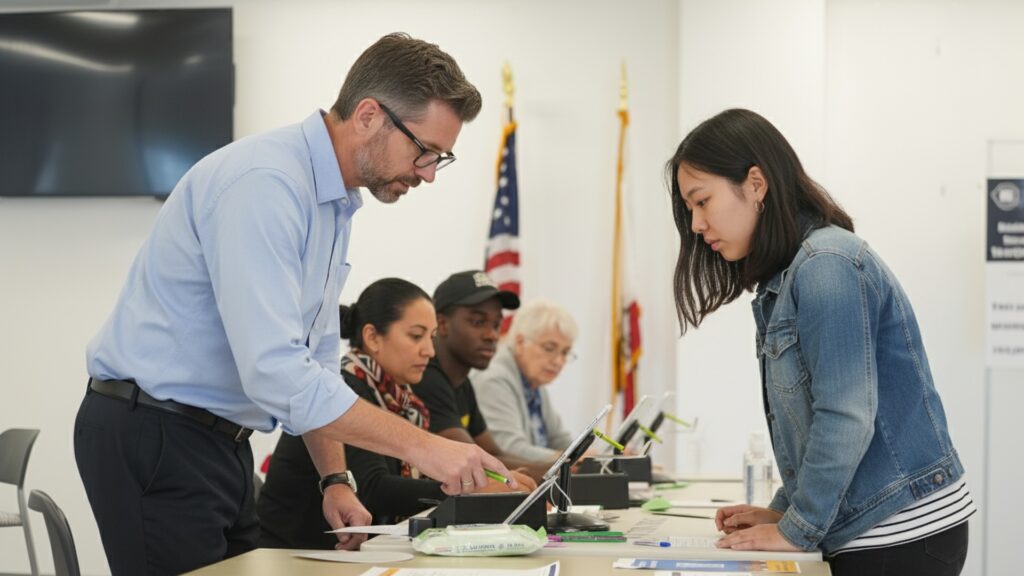
(CLAIR | Simi Valley, CA) — I Voted Today. On my ballot: Proposition 50. Not a measure I wanted to have to vote on — but one I couldn’t ignore.
It was not just a standalone measure, but an effort to position California in the ongoing political back-and-forth over control and representation at the national level. I had to tune out the ads, the mailers, the flood of money. I had to ask myself what this measure actually does, who it empowers and why now.
As of November 3, the “yes” campaign had raised $171.7 million. The “no” side had raised $84.5 million.
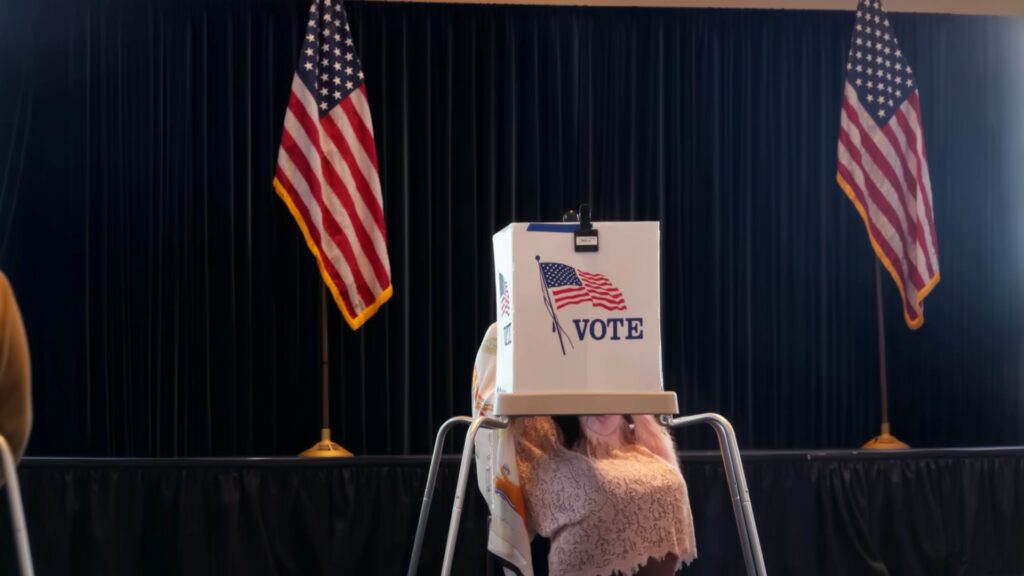
So how much sway and choice do voters really have?
We’re told we decide. But our choices are shaped by more than just our opinions. They’re influenced by who has money, who has power and who gets to be heard. When a single proposition pulls in more than $250 million in campaign spending, it’s clear: the decision might be ours, but the field isn’t level.
In contrast, local democracy looks different.
In Simi Valley’s 2026 municipal elections, residents will vote for mayor (two-year term) and for city council members in Districts 1 (two years), 2 and 4 (both four years). These are the kinds of elections where you might run into a candidate at the grocery store. They walk neighborhoods, attend events and speak directly with voters. The campaigns operate on an attainable budget for most individuals and those who support them. That makes them feel more real. It’s a stark contrast to the statewide and national stage, where big donors and party machines dominate.
The forces shaping elections in the U.S. go well beyond party lines and fundraising. The state of the economy often plays a leading role. In 2024, more than half of voters said the economy was the most important issue driving their vote. Inflation, job security and cost of living can override even deeply held political beliefs.
And behind that spending is another force — corporate power. Major industries and big business interests regularly bankroll ballot measures and candidate campaigns, shaping not just who wins but which issues dominate the public conversation. From energy companies funding anti-regulation ads to pharmaceutical giants lobbying through PACs, corporate influence often steers the narrative before a single vote is cast.
As Pew Research Center put it, “Americans have long believed that major political donors and special interests have too much influence on politics and that ordinary people have too little.”
Demographics also matter. Age, education, race, gender and geography all influence voter behavior in ways that show up clearly at the polls. Urban voters often lean differently than rural ones. Young people tend to vote less than older generations. When people feel acknowledged or represented, they’re more likely to engage politically.
Candidate image plays a role too. Many of us respond to presence and perceived leadership. We often look for someone who feels relatable or appears competent — though perceived competence doesn’t always align with actual ability.
And then there’s the structure itself. In presidential elections, voters aren’t choosing a president directly — they’re selecting electors pledged to a candidate. That’s how someone can win the presidency while losing the national popular vote — as happened with George W. Bush in 2000 and Donald Trump in 2016. The system isn’t broken, but it is layered.
In 2024, Kamala Harris wasn’t chosen through a primary process. When President Biden exited the race, party leaders acted quickly to put Harris forward. It was a coordinated decision, not a public vote.
Donald Trump, by contrast, entered the 2016 race as a political outsider with no prior experience in public office. He broke with traditional campaign playbooks, relying heavily on free media coverage, controversial messaging and his personal brand. Despite losing the national popular vote, he won the presidency through the Electoral College..
Despite the appearance of voter choice, no independent has ever been elected U.S. president. Every president has come from a dominant party: Democrat, Republican or one of the historical parties like the Whigs. Millard Fillmore, who served from 1850 to 1853, was the last president not affiliated with either of the two modern parties. Since then, the two-party system has effectively locked down the path to the presidency.
Ross Perot, running as an independent in 1992, came closer than anyone in recent memory to breaking the two-party hold on the presidency. He won nearly 19% of the national popular vote — around 20 million votes — but didn’t win a single state, and therefore received no electoral votes. His support was broad but not concentrated enough to overcome the structure of the Electoral College.
Although the Simi Valley municipal election is still a long way off, candidates are already lining up. The city clerk’s campaign-disclosure page shows intention and active filings for the following candidates so far: Mayor at-large, Mike Judge, Robert Clarizio and Dee Dee Cavanaugh; City Council District 1, Anthony Q. Thompson, Joseph D. Ayala and Jill Abele; District 2, Richard M. Perini; and for District 4, Rockne D. Rhodes.
That’s a list people here may recognize — names seen at community events, on local boards or in past races. You can see the filings yourself at simivalley.org.
These are elections where you might actually meet the person asking for your vote. You’ll hear their plans firsthand. You’ll know whether they’ve shown up — or not — in the community.
That kind of proximity makes voting feel more tangible.
But outside city limits — and even far beyond California — there are signs that connection and momentum can still shift political gravity.
In New York City, Zohran Mamdani has gained traction in the mayoral race without legacy party backing. His visibility came from grassroots organizing and digital reach. Whether you support him or not, his campaign shows that energy, creativity and persistence can still carry weight.
Voting isn’t just about being present. It’s about being informed. Know who funds campaigns. Know what candidates stand for. Know how the system works.
Because real democracy isn’t just showing up. It’s showing up aware.