
 Daniel Jordan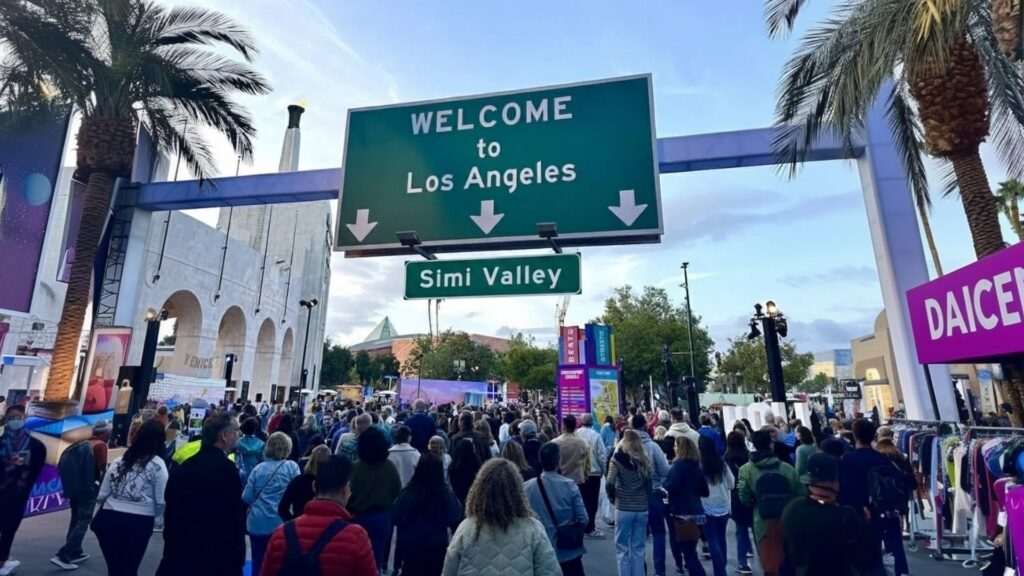
(CLAIR | Simi Valley, CA) — Simi Valley is days away from a decision that could redefine its political identity.
With Proposition 50 heading toward likely passage, California voters appear ready to approve new congressional maps that would likely move the city out of Ventura County’s 26th District and into Los Angeles County’s 32nd — linking Simi to coastal communities like Malibu, Agoura Hills, and Pacific Palisades.
A new Emerson College poll shows 57% of likely voters support Prop 50, while 37% oppose it and 6% remain undecided. Support has grown among key groups, signaling momentum as Election Day nears.
Behind the measure lies a national political tug-of-war. The new maps, drafted largely behind closed doors in Sacramento, are designed to add five Democratic congressional seats — a direct response to redistricting moves in Texas that gave Republicans five new districts.
If successful, California Democrats could hold nearly all of the state’s House seats, extending their control to 48 of the 52, up from 43 today. This represents one of the largest single-party shares in modern U.S. history. Supporters call it balance against Republican gains in other states. But for Simi Valley, the question is local: When one party controls nearly every seat, how much room remains for diverse perspectives or regional priorities? In a delegation that speaks with one dominant voice, smaller communities may find it harder to make their voices heard.

What the Shift Means for Simi Valley and the Ventura County Region
– For Sacramento, Proposition 50 is about national balance.
– For Simi Valley, it’s about local voice.
The measure would move the city from a district that includes Ventura, Oxnard, Thousand Oaks, Camarillo, and Moorpark — communities bound by shared infrastructure, land use, and regional priorities — into one centered in Los Angeles County, where issues like coastal development, mass transit, and urban density dominate.
For Simi Valley, the concern isn’t partisan. It’s practical. Would joining Los Angeles County elevate the city’s visibility, or simply bury it beneath the weight of much larger neighbors?
Many in Simi Valley’s leadership circle believe the city’s needs are best met when it remains aligned with Ventura County — a region that shares its geography, challenges, and pace of growth. They argue that Ventura’s collaborative approach gives mid-sized cities like Simi a stronger, more unified voice in Sacramento and Washington.
The Council’s Stand
Earlier this fall, the Simi Valley City Council took a formal position opposing the proposed map, warning that the change could weaken long-standing regional partnerships. Councilmembers expressed concern that removing Simi from Ventura County’s congressional district would separate the city from allies it depends on for shared planning — from wildfire coordination to highway improvements and environmental protection.
Others on the council stressed that residents should decide the issue at the ballot box, not through city politics. The debate wasn’t about party lines but about representation — and whether Simi Valley’s needs would still be understood once its seat at Ventura County’s table was gone.
What Simi Valley Gains — and What It Risks
Proponents of Prop 50 say realignment could bring access to larger funding pools and greater influence in federal policy circles. A Los Angeles County district might open doors to new partnerships, resources, and attention from congressional leaders.
But critics counter that those gains come at a cost — the loss of a shared regional identity. Ventura County’s civic model has long relied on collaboration among its cities, grounded in similar economies, land uses, and growth challenges. By crossing county lines, Simi risks becoming one voice in a district defined by coastal priorities and urban demands far different from its own.
For a city built on local control and steady, community-driven progress, the change raises a simple but defining question: Is Simi Valley stronger as part of Ventura County — or as one small voice in Los Angeles’ chorus?
Why It Matters
Representation isn’t just about who holds office. It’s about who understands the community. Ventura County leaders share Simi’s daily realities — its commuter patterns, its wildfire seasons, its balancing act between family neighborhoods and business corridors.
If Proposition 50 passes — as polls suggest it will — Simi Valley will have to fight harder to keep that understanding alive. The city’s story, priorities, and progress will need to compete in a larger arena.
And yet, amid the noise of national politics, one truth remains clear: No one can speak for Simi Valley better than Simi Valley itself.















On the national scene, the hurt feelings of Simi Valley are a very small tick on the back of a very small dog. Name one significant local thing that your current Simi Valley congressmember has achieved. SV is nationally insignificant now and will remain nationally insignificant in the future.